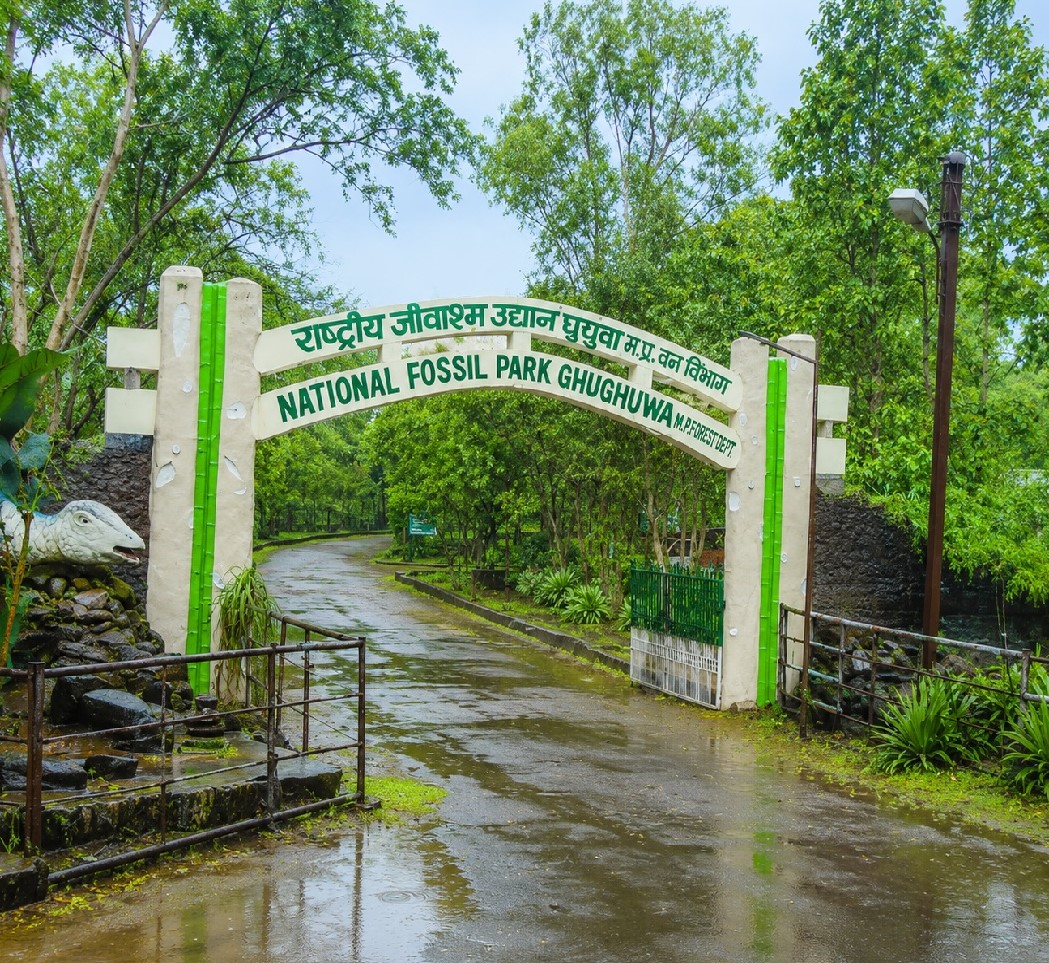
Let’s visit an amazing place where trees have turned into stone — The National Ghughua Fossil Park
You watch many shows and movies that depict miracles, such as a magician or a mystic casting a spell on a plant or a living creature, transforming it into stone.
Precisely the same phenomenon occurs here, but in a different and scientific manner. In this instance, it is Nature itself or ‘Mother Nature’ that performs the magic, transforming trees or other living organisms into stone. This entire process the transformation of an object into stone takes an extremely long time, and today, we can observe these transformed objects in the form of ‘fossils.’
In this article, we are providing you with information about the Fossil Park located near Dindori district.
Location of National Fossil Park Ghughwa
Ghughwa National Fossil Park is a unique place in Madhya Pradesh, and situated in the Ghughwa village of Dindori district, around 65–70 km from Mandla and about 90 km from Jabalpur. It is situated on the Niwas-Shahpura Road.
Ghughwa park is situated in the Shahpura Tehsil of Dindori District. It is located about 14 km away from the main Shahpura Tehsil center. You can easily reach this location by road, as the park is connected by a well-maintained road.
The park spans a vast area and features a dedicated parking facility where you can park your vehicle before entering the park. Park is well-maintained with walking paths and information boards.
The park was established to preserve fossilized remains of ancient plants, especially trees, which existed millions of years ago. These fossils provide valuable information about the climate, vegetation, and environment of prehistoric times.
Ghughwa National Fossil Park Google Map Location
Travel To National Ghughua Fossil Park
Ghughua Fossil Park is one of the most unique and scientifically important tourist destinations in India. Located in the Dindori district of Madhya Pradesh, this park is famous for its well-preserved plant fossils that date back millions of years.
You can easily reach this park from the districts of Jabalpur, Mandla, and Dindori. It offers a rare opportunity to explore prehistoric life and understand the evolution of vegetation on Earth.
Often called a “living museum of fossils,” this park attracts scientists, researchers, students, and tourists who are interested in nature, history, and the ancient past of our planet.
You can reach this Fossil Park using either your private vehicle or public transportation. The park is well-connected by road, and a comprehensive range of amenities is available for visiting tourists.
The park remains open during the daytime. It offers an excellent opportunity for geologists, geology enthusiasts, and curious travelers alike. There is a prescribed entry fee for the park, where visitors can observe a wide variety of tree fossils.
The exhibits primarily feature fossils of trees and seeds, dating back approximately 60 million years. Dinosaur fossils are not available for viewing here, which is a downside. However, you will be pleased to know that you get see fossils of ancient plants.
Ghughua Fossil Park spans a vast area. You can explore the open grounds to view all the fossils. Additionally, information boards have been installed throughout the site to provide details regarding these fossil plant.
A wealth of information is available here regarding the ancient landscapes of the region, allowing you to learn about the history of the very ground upon which you stand. By the way, this is very interesting.
Overall, this is a good place to visit with your children and friends, where you can gain information about fossils.
Discovery and Formation
The fossils at Ghughwa were discovered in the 20th century by scientists who were studying the geological structure of the region. It was found that this area once had dense forests during the prehistoric era.
Over millions of years, natural processes like sedimentation, pressure, and mineralization turned these plants and trees into fossils. This process is known as fossilization.
The fossils found here are believed to be around 40 to 150 million years old, dating back to the time when dinosaurs lived on Earth.
Types of Fossils Found
National Ghughua Fossil Park is mainly known for plant fossils, but it also contains a variety of fossilized remains. Some of the important types of fossils found here include:
- Fossilized tree trunks
- Leaf impressions
- Seed fossils
- Palm tree fossils
- Bamboo fossils
- Fruits and flowers fossils
- Marine fossils (in some areas)
- Coconut tree fossils
One of the most interesting features of the park is the presence of palm tree fossils, which indicate that the area once had a tropical climate.
These fossils are spread across the park and are protected carefully so that visitors can see them without damaging them.
Best Time to Visit in National Fossil Park Ghughwa
The best time to visit National Fossil Park Ghughwa is during the winter and post-monsoon seasons, because at this time the weather is very good to visit here and the surroundings are very beautiful you can visit at this time and explore all the things of this place
During the monsoon season, the area becomes green and fresh, but paths may be muddy. Summer can be hot, so it is better to avoid afternoon visits during that time.
How to Reach National Fossil Park Ghughwa
The park is located in Dindori district and is accessible by road.
How to reach Ghughwa Fossil Park By Road
By Road: You can reach Ghughwa from Mandla, Dindori, or Jabalpur by car or bus. The roads are mostly good, and the journey passes through scenic rural areas.
How to reach Ghughwa Fossil Park By Rail
By Rail : Nearest Railway Station: Jabalpur Railway Station (about 90 km)
The nearest railway station to the National Ghughua Fossil Park is Jabalpur Railway Station, which is located approximately 90 km from Ghughwa village. You can easily reach Jabalpur Railway Station from other major cities and then travel to this destination by road.
How to reach Ghughwa Fossil Park By Air
Nearest Airport: Jabalpur Airport
The nearest airport to Ghugwa National Park is Jabalpur Airport. You can easily reach Jabalpur from other major cities by air, and then travel to Ghugwa Park by road. From Jabalpur, you can hire a taxi or take a bus to reach Dindori and then Ghughwa.
Nearby Places to Visit
If you are planning a trip to National Ghughua Fossil Park, you can also visit nearby attractions:
- Dindori town
- Mandla
- Sahastradhara Waterfall Mandla
- Mandla Fort
- Kanha National Park
You can plan a combined trip to explore both natural and historical attractions.
Conclusion
National Ghughua Fossil Park is a fascinating destination that takes you millions of years back in time. It is a place where science, history, and nature come together to create a unique experience. The fossilized trees and plants preserved here tell the story of Earth’s ancient past and provide valuable knowledge about the evolution of life.
If you are planning to explore unique and educational places in Madhya Pradesh, National Ghughua Fossil Park should definitely be on your list. It is not just a tourist place but a journey into the prehistoric world that will leave you amazed and inspired.