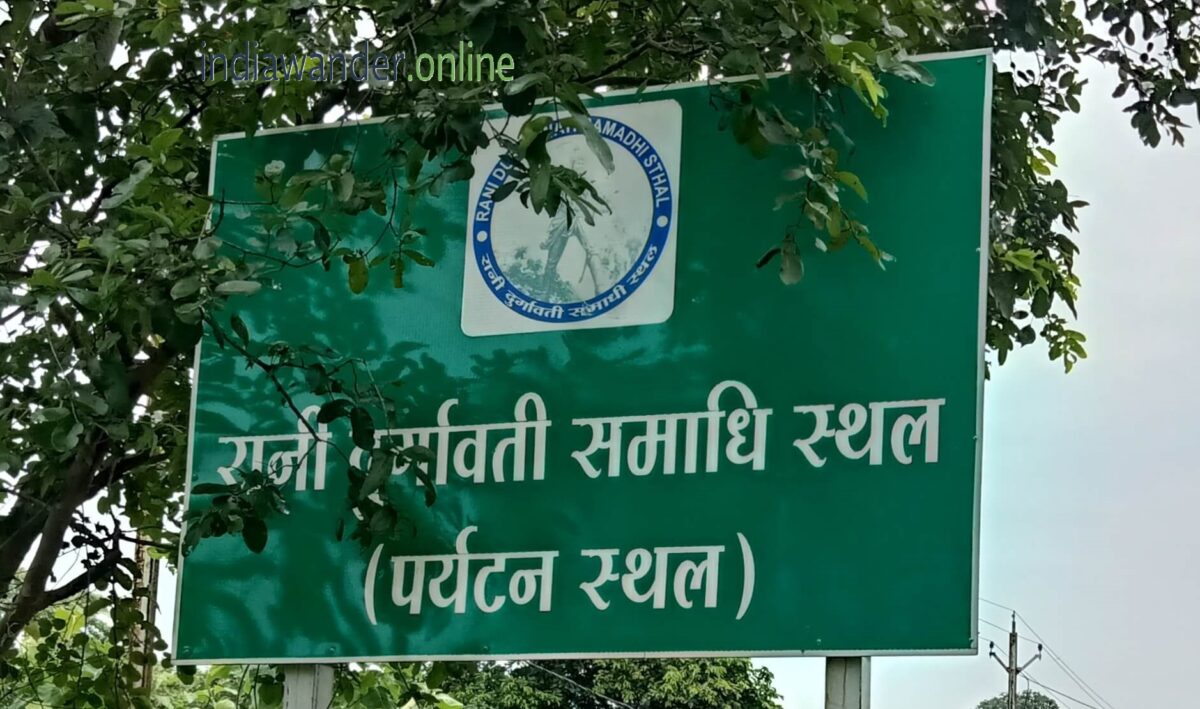
Rani Durgawati Samadhi Sthal is a historically important monument located in Jabalpur of Madhya Pradesh, dedicated to the brave Gond queen Rani Durgawati. She is remembered as one of the most courageous women rulers in Indian history, who fought valiantly against the Mughal army to protect her kingdom and dignity.
This memorial site is situated just outside the city of Jabalpur, along the route to the Bargi Dam. You can reach this beautiful spot with ease and explore the premises. The site is exceptionally well-maintained. If you happen to be traveling from Jabalpur to Bargi, you can stop here and spend some time.
The samadhi is not just a memorial. It is a symbol of bravery, self-respect, and sacrifice. History lovers, students, and tourists visit this place to learn about the life and struggle of Rani Durgawati.
Location of Rani Durgawati Samadhi
Rani Durgawati Samadhi is located near Jabalpur district, Madhya Pradesh. It is often associated with the region of Mandla and Garha, which were part of her kingdom.
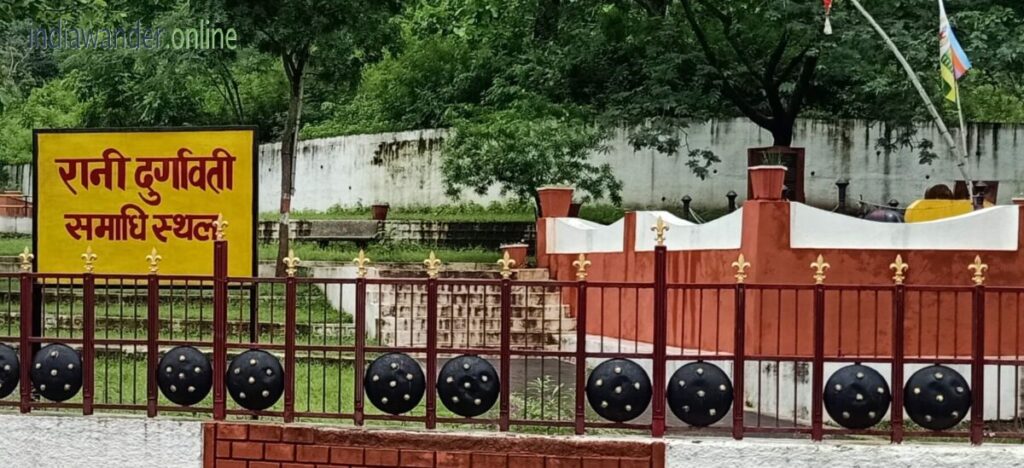
This memorial site is situated on the road leading to the Bargi Dam. As it is located directly on the main road, you can easily reach it using either your own vehicle or public transport. The site is enclosed by a boundary wall, within which lie various symbolic structures and memorial shrines.
You can enter the premises through the main gateway, park your vehicle outside, and explore the beautiful gardens as well as the sacred symbols housed within.
Directly in front of the Rani Durgavati Memorial lies a large open expanse, through which a small stream flows during the monsoon season. Additionally, there is a small lake located here, flanked by a dense forest nearby.
The samadhi is surrounded by natural beauty, forests, and historical sites, making it a peaceful and meaningful place to visit.
Who Was Rani Durgawati?
Rani Durgavati was a Gond queen. She was born in Kalinjar, into the family of the Chandel ruler Kirti Singh. It is belived that she was named Durgavati either because she was born within the fort (Durga) or in honor of the Goddess Durga.
In 1542, Rani Durgavati was married to Dalpati Shah, the eldest son of the Gond ruler Sangram Singh. In 1545, Rani Durgavati gave birth to a son, whom she named Veer Narayan. Just a few years later, in 1550, her husband, Dalpati Shah, passed away.
The Queen took the administration under her control and assumed the reins of governance. As Akbar was expanding his empire, he set his sights on annexing the Queen’s kingdom.
Abdul Majid Asaf Khan, Akbar’s Governor (Subedar) of Manikpur launched an attack against Rani Durgavati near the Narai Nala with an army of 50,000 soldiers. The Queen, along with her army, confronted him resolutely, delivered a fierce counter-attack, and drove his forces back.
The following day, Asaf Khan attacked with artillery. During this engagement, Rani Durgavati sustained injuries and, finding herself in a vulnerable position, chose to end her life by committing suicide with her own dagger.
She breathed her last on June 24, 1564, thereby attaining immortality. She remains renowned for her valor, sacrifice, and profound love for her motherland. Consequently, tributes are paid to her every year on June 24th.
Historical Importance of Rani Durgawati Samadhi
Rani Durgawati fought a fierce battle against the Mughal general Asaf Khan in 1564. Despite limited resources, she resisted the Mughal army with great bravery.
When she realized that defeat was certain and did not want to be captured, she chose martyrdom. The place associated with her sacrifice is deeply respected, and her samadhi stands as a reminder of her fearless spirit.
The Rani Durgawati Samadhi honors her courage and her decision to die with honor rather than surrender.
Architecture and Surroundings
The samadhi has a simple yet dignified structure, reflecting the strength and simplicity of Rani Durgawati’s life. A boundary wall encloses this memorial site, which features numerous attractions worth seeing.
Here, you can observe a tall platform upon which a statue of Rani Durgavati is installed. This statue depicts Rani Durgavati in a standing posture and is truly exquisite to behold. The site also features a statue of an elephant, painted white, which is quite striking in appearance.
Within the garden lies several stone structure bearing several inscribed names. These names belong to individuals who made the ultimate sacrifice during the freedom struggle. The walls of this site are adorned with various paintings that provide insights into Rani Durgavati’s battles and her reign.
A smaller platform has also been constructed here, featuring a stone structure upon which a carving of Rani Durgavati is etched. Many people come here and worship this place.
Directly across the road from this area lies an open ground. Cement benches have been installed here, offering a place where visitors can sit and spend some time in relaxation. The grounds also feature a lake, while on the opposite side stands the memorial dedicated to Rani Durgavati’s son.
A colossal statue of Rani Durgavati’s son, Veer Narayan, is installed at this location. Additionally, a small temple has been built here, which visitors are welcome to visit and pay their respects.
Key Features:
- Stone memorial structure
- Peaceful surroundings
- Historical inscriptions and plaques
- Natural greenery around the site
The calm environment helps visitors connect emotionally with history.
Best Time to Visit Rani Durgawati Samadhi
The best time to visit the Rani Durgavati Samadhi site is during the winter season, as the weather is very pleasant at this time, making it perfect for sightseeing.
You can easily travel there and explore all the attractions. As a tourist, you may choose to visit during the winter season.
The monsoon season is also an excellent time to visit, as the entire area becomes blanketed in lush greenery during the rains, presenting a truly captivating sight. There are also small streams in the vicinity that are beautiful to behold. You can spend some time relaxing there.
How to Reach Rani Durgawati Samadhi
- By Road : The site is accessible by road from Jabalpur and Mandla. Local taxis and buses are available.
- By Train : The nearest major railway station is Jabalpur Railway Station, which is well connected to major cities.
- By Air : The nearest airport is Jabalpur Airport, around 20–30 km away.
Rani Durgavati Samadhi Google Map location
Entry Fee and Timings
- Entry Fee: Free
- Timings: Open during daylight hours
It is advised to visit during morning or early evening for a peaceful experience.
Nearby Places to Visit
While visiting Rani Durgawati Samadhi, you can also explore:
- Mandla Fort (Garha Fort)
- Rani Durgawati Museum, Jabalpur
- Bhedaghat Marble Rocks
- Dhuandhar Waterfall
These places together offer a complete historical and cultural experience.
Importance of Rani Durgawati in Indian History
Rani Durgawati is remembered as:
- A fearless warrior queen
- A symbol of resistance against Mughal expansion
- A protector of tribal and regional culture
Her legacy continues to inspire generations, especially women, to stand strong against injustice.
Travel Tips for Visitors
- Maintain silence and respect at the samadhi
- Avoid littering
- Read information boards to understand history
- Combine the visit with nearby historical sites
Conclusion
Rani Durgawati Samadhi is more than just a historical monument; it is a reminder of India’s rich heritage and the bravery of a queen who chose honor over life. Visiting this place gives a deep sense of respect for the sacrifices made by women warriors in Indian history.
If you are interested in history, culture, or inspirational stories, a visit to Rani Durgawati Samadhi is truly worthwhile.