Dhar Fort is one of the most important historical landmark and powerful forts of Madhya Pradesh. Located in the heart of Dhar city, this magnificent fort reflects the rich cultural heritage and architectural brilliance of the Malwa region.
Dhar Fort is spread over a large area. There are many places to visit inside the fort. Built primarily with red sandstone, the fort stands as a symbol of power, strength, and royal grandeur.
Dhar has been an important center of administration, culture, and education since ancient times. The fort played a key role in shaping the political history of central India and remains a popular tourist attraction for history lovers and travelers.
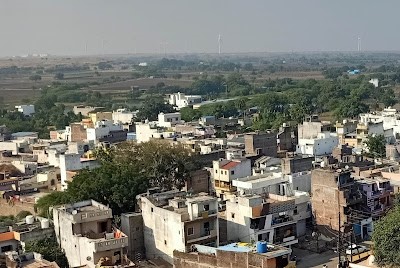
Travel the magnificent Dhar Fort
Dhar Fort in Dhar district is a major historical monument of Madhya Pradesh, which is a fine example of the fusion of Hindu, Islamic and Afghan architecture, taking us back to the pages of history. Over time, many rulers ruled over this fort and developed it according to their civilization.
Located on the high Hill, Dhar Fort is situated on heart of the city. It is easily accessible by road. A well-maintained road leads to the fort. Along the way, you will see religious and important places, including a Hanuman temple and a dargah.
Upon entering the Dhar Fort Complex, there is a person to take down your name and mobile number. An entry fee is required to enter the fort area. You can park your vehicle inside the fort complex and explore the fort.
Dhar Fort, spread over a large area, houses several notable buildings, including the Sapta Kothri, Hammam, Kharbuja Mahal, View Point, Museum and Baoli. The fort also offers spectacular views of the city from the top, making it worth a visit.
Dhar Fort is surrounded by massive walls, and all the structures are built within these walls. One of the famous structures in Dhar Fort is Kharbuja Mahal.
Kharbuja Mahal is very beautiful and resembles a Kharbuja, hence its name. Kharbuja Mahal has an interesting history. Kharbuja Mahal is located on the left side of the fort. There is a narrow path leading to this palace.
Near Kharbuja Mahal, you will see Sheesh Mahal. The Sheesh Mahal is now completely ruined. Sheesh Mahal is a two-storey building and many bats live inside the palace.
You can see a dense forest in front of the Sheesh Mahal. Unnecessary trees are taking over every space. This place is not properly maintained and is gradually deteriorating. There are stairs along the Sheesh Mahal that lead to the roof. You can climb up.
Near the Sheesh Mahal, there is a tower built, which is called the Burj. It’s a beautiful structure, offering a panoramic view of Dhar city and the surrounding area.
Continuing further, you can see Sapt Kothari. This is a beautiful, old building and consists of seven small rooms, hence the name Sapt Kothari. However, its condition is poor. It is almost in ruins.
Near Sapt Kothari Palace, there is a small umbrella-like structure, offering a spectacular view of Dhar city. After exploring all the old buildings, you can visit the museum, located on the right side of the fort.
The Dhar Fort Museum is well maintained and has several galleries displaying antiques, Weapon, the Shivalaya Gallery, the Jain Gallery, and the Inscription Gallery. The garden area outside the museum showcases several old sculptures.
Inside the fort, near the museum, there is also an old stepwell where you can go on foot. This stepwell is beautiful and very deep. The water is dirty. There are stairs to reach the water.
Read More : Madan Mahal Fort Jabalpur
Dhar Fort History
The history of Dhar Fort dates back to ancient and medieval periods. Dhar was once the capital of the Parmar dynasty, one of the most powerful Rajput dynasties of central India. The famous king Raja Bhoj ruled this region in the 11th century and made Dhar an important center of learning and culture.
The present structure of Dhar Fort was mainly built during the 14th century by the Delhi Sultanate ruler Muhammad bin Tughlaq. Later, it was renovated and strengthened by different rulers, including the Mughals and the Marathas.
Due to its strategic location, the fort witnessed several battles and political changes. It remained under the control of various dynasties, each contributing to its architecture and development.
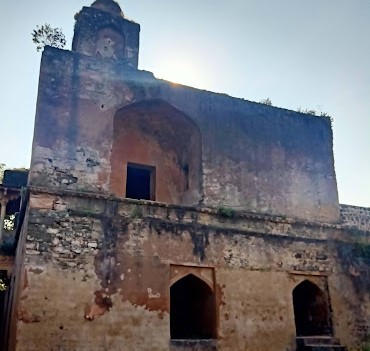
Dhar Fort Built By
Although the region was originally developed by the Parmar rulers, the current fort structure was built by Muhammad bin Tughlaq in 1344 AD. He chose Dhar as an important military and administrative center.
The fort was constructed using red sandstone, giving it a unique and striking appearance. Later rulers added modifications and repairs to strengthen its defensive structure.
Architecture of Dhar Fort
Dhar Fort is known for its strong walls, large gateways, and impressive bastions. Built on a small hill, it provides a panoramic view of Dhar city and the surrounding plains.
Some key architectural features include:
- Massive red sandstone walls
- Circular bastions at corners
- Large arched entrances
- Spacious courtyards
- Underground passages (believed to exist)
The design reflects Afghan and Mughal architectural influence, combined with local craftsmanship. The fort’s elevated position made it easier to defend against enemy attacks.
Inside the fort complex, visitors can see open grounds and structures that were once used for administrative and military purposes.
Best Time to Visit Dhar Fort
The best time to visit Dhar Fort is from October to March when the weather is pleasant and suitable for sightseeing. Monsoon is also a good time to visit this place because during monsoon this fort becomes lush green. You can see greenery everywhere.
Summers can be very hot in this region, making winter the ideal season for exploration. Evening time is especially beautiful, as visitors can enjoy sunset views from the fort walls.
Read more : Rahatgarh Fort Sagar
How to Reach Dhar Fort
Dhar city is well connected by road to major cities of Madhya Pradesh.
- Distance from Indore: Around 65 km
- Nearest Railway Station: Indore Junction
- Nearest Airport: Devi Ahilya Bai Holkar Airport, Indore
Regular buses and taxis are available from Indore to Dhar. The fort is located within the city and can be easily reached by local transport.
Travel Tips
- Wear comfortable footwear for walking.
- Carry water during summer visits.
- Explore nearby historical sites in Dhar.
- Respect the monument and avoid littering.
Nearby Attractions
While visiting Dhar Fort, tourists can also explore:
- Bhoj Shala
- Mandu (around 35 km from Dhar)
- Bagh Caves
These places enhance the historical and cultural experience of the trip.
Conclusion
Dhar Fort stands as a proud reminder of the glorious past of the Malwa region. Built primarily by Muhammad bin Tughlaq and influenced by various dynasties, the fort showcases strong military architecture and historical depth.
For travelers interested in history, architecture, and cultural heritage, Dhar Fort offers an enriching experience. Its red sandstone walls, elevated position, and connection to the legacy of Raja Bhoj make it one of the must-visit historical sites in Madhya Pradesh.
A visit to Dhar Fort is not just a journey through a monument, but a walk through centuries of royal history and architectural excellence.