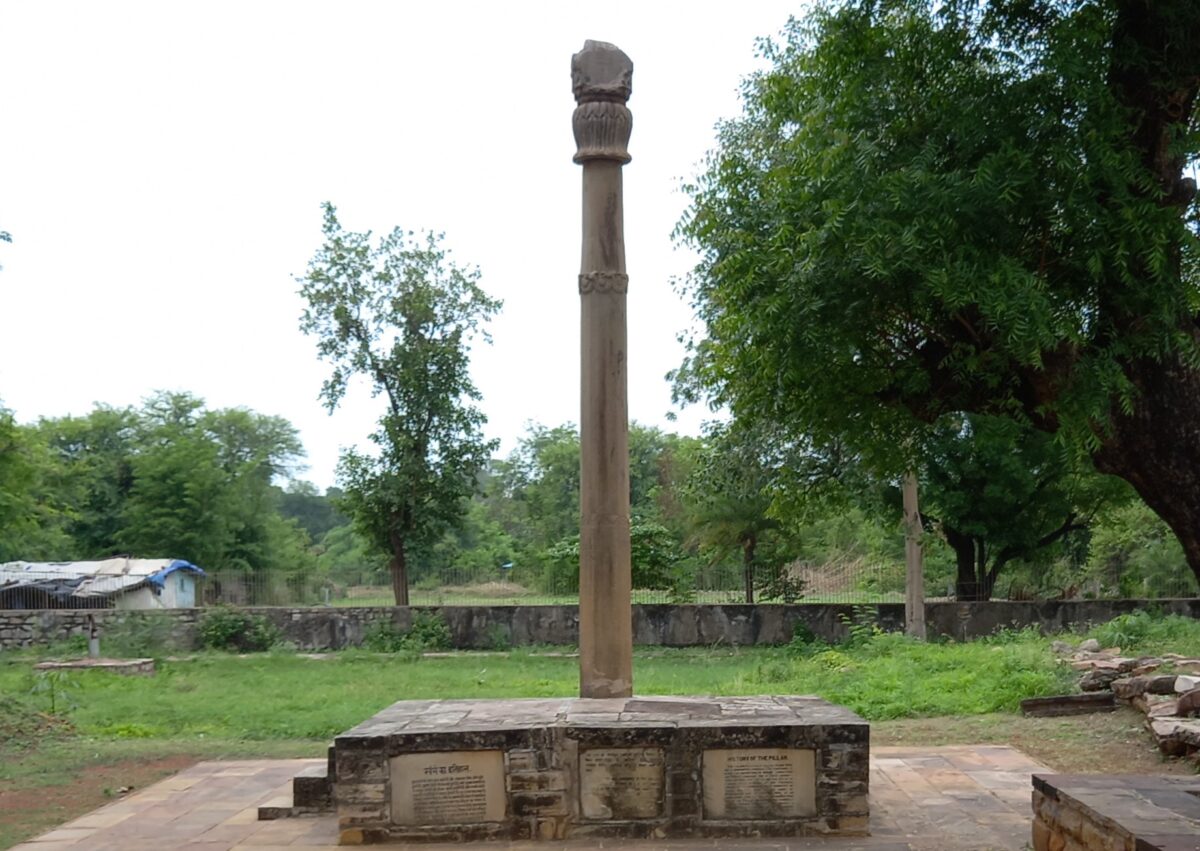
The Heliodorus Pillar is one of India’s most historic monuments. It is also known as “Khamba Baba” or the Garuda Dhwaj Pillar.
This ancient stone pillar, known as the Garuda Pillar, is a powerful testimony to early cultural exchanges between India and Greece. Dating back to the 2nd century BCE, this pillar is not only an archaeological treasure but also a symbol of religious devotion and diplomacy.
Located in the small village of Besnagar, just a few kilometers from the city of Vidisha, the Heliodorus Pillar attracts historians, archaeologists, and curious travelers interested in India’s ancient past.
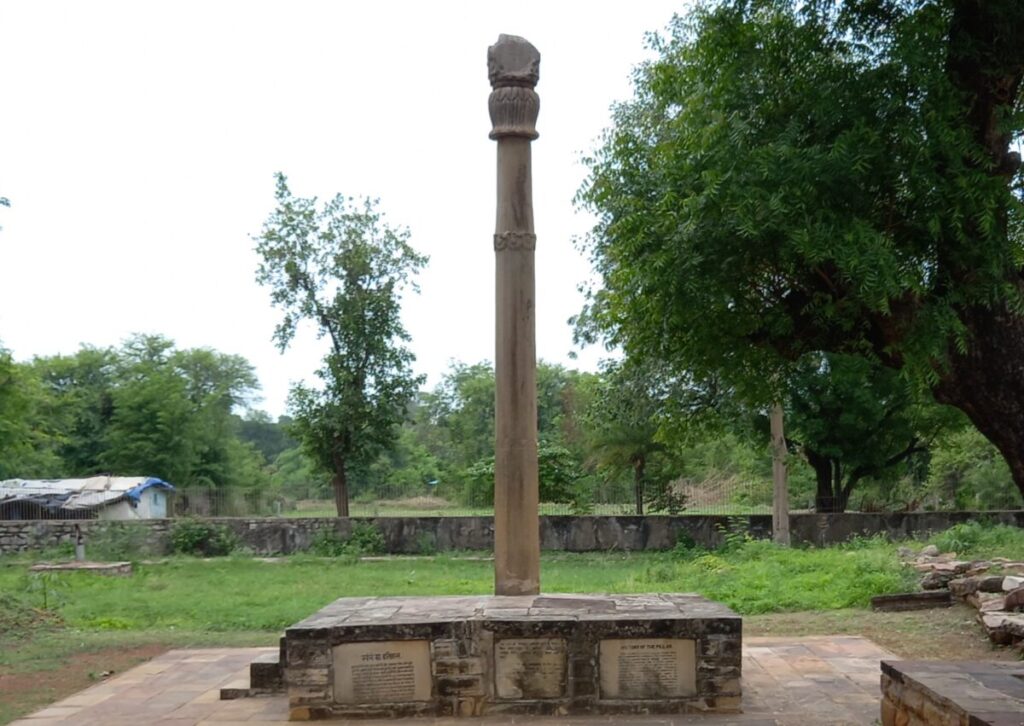
Heliodorus pillar where is located
The Heliodorus pillar is located in Besnagar, the ancient city of Vidisha, near the confluence of the Halali or Betwa River. Besnagar town is near Vidisha Ashoknagar Highway Road
It is outside the modern city of Vidisha. It is about 4 km from the city headquarters of Vidisha. You can easily reach there by road using vehicle or public transport. This pillar is inside a densely populated area.
Visit the Heliodorus Pillar
The Heliodorus Pillar is an ancient stone pillar in the city of Vidisha. If you’re a history buff or archaeologist, you should definitely visit it because it’s a beautiful, ancient site, and the management is excellent.
This site holds a significant significance in Indian history. It’s about 5 km from the Udayagiri Caves. If you’re visiting the Udayagiri Caves, this place is on the way to the Udayagiri Caves.
You’re going there after returning from the Udayagiri Caves, this place is about 500m from the Vidisha Ashokpur Highway. You can drive there and park outside the boundary wall. This place is covered by a boundary wall, and the entire area is under the open sky, and there is no shade.
You can go there and enter through the gate. There’s no entry fee, and the locals worship this pillar. You can go inside and see this beautiful pillar. This pillar is quite amazing and is built on a platform.
On the top of the pillar, you can see beautiful artwork and designs that look amazing, and in the middle, you can see beautiful flowers pattern. At the base of the pillar, you can see some boards providing information about this pillar.
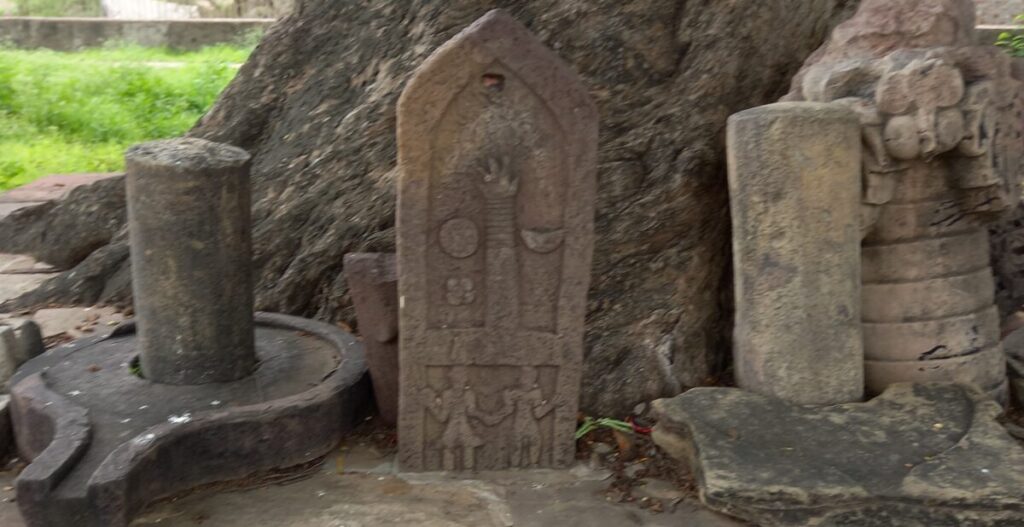
There are many things around the Heliodorus pillar. Ancient idols are placed under the tree, and local people used to worship them. This is a mark of worship made by ancient people and people still worship it.
Near the pillar, you can see a some remains of old temple, which is evidence of an ancient temple. There are lawns and some beautiful trees around the pillar, and during the rainy season, the place looks lush and beautiful.
Read more : Charan Teerth
Historical Background of Heliodorus Pillar
The Heliodorus Pillar was erected around 113 BCE by a Greek ambassador named Heliodorus. It is an ancient sandstone column located in old Besnagar. Antialcidas was the ruler of Taxila and he sent Heliodorus as an ambassador to the court of King Bhagabhadra of the Shunga dynasty.
This pillar is dedicated to the Vasudeva form of Lord Vishnu. The Brahmi script engraved on the pillar reveals that Heliodorus was a devotee of Lord Vishnu. This inscription is considered one of the earliest pieces of evidence of Vaishnavism (the worship of Vishnu) in India.
The pillar demonstrates that religious beliefs in ancient India attracted followers even from foreign lands. It is a remarkable example of cross-cultural influence during ancient times.
Why is it Called the Garuda Pillar?
The Heliodorus Pillar is also known as the Garuda Stambha because it was originally topped with a sculpture of Garuda, the divine vehicle (vahana) of Lord Vishnu.
Garuda is often depicted as a mythical bird-like figure symbolizing strength and protection. Although the original Garuda statue is no longer intact, the name “Garuda Pillar” continues to be used.
Architectural Features
1. Structure and Design
The pillar stands approximately 6.7 meters (around 22 feet) tall. It is made of sandstone and features a smooth, polished surface typical of ancient Indian stone craftsmanship.
This structure consists of a square base, an octagonal shaft, and a rounded top. This change from a square to a round shape gives the pillar a refined and elegant look.
2. The Inscription
The most important feature of the Heliodorus Pillar is its Brahmi inscription. The inscription states that Heliodorus, son of Dion, from Taxila, erected the pillar in honor of Vasudeva (a form of Vishnu).
This inscription is historically significant because:
- It confirms diplomatic relations between Indo-Greek and Indian kingdoms.
- It shows early evidence of Vaishnavism.
- It highlights the spread of Indian religious ideas beyond local communities.
How to Reach Heliodorus Pillar
The Heliodorus Pillar is located in Besnagar village, near Vidisha in Madhya Pradesh. It is about 4 km from Vidisha town and around 60 km from Bhopal.
- By Road : Vidisha is well connected by road to Bhopal and other nearby cities. Local auto-rickshaws and taxis can take you from Vidisha to Besnagar easily.
- By Train : Vidisha Railway Station is the nearest railhead. You can easily reach Vidisha from other cities by train.
- By Air : The nearest airport is Raja Bhoj Airport in Bhopal.
Heliodorus Pillar Google map location
Best Time to Visit in Heliodorus Pillar
The best time to visit the Heliodorus Pillar is between October and March, when the weather in Madhya Pradesh is pleasant. At this time is winter season and is a good time to visit this place.
Summer temperatures can be very high, so winter and early spring are ideal for comfortable sightseeing.
Read more : Bija Mandal Vidisha
Why Heliodorus Pillar is Unique
The Heliodorus Pillar is unique because:
- It was erected by a Greek ambassador in ancient India.
- It contains one of the earliest inscriptions related to Vishnu worship.
- It symbolizes early cultural globalization.
- It represents diplomatic and religious harmony.
Few monuments in India carry such clear evidence of ancient international interaction.
Travel Tips
- Combine your visit with Udayagiri Caves and Sanchi Stupa for a full-day heritage tour.
- Visit during morning hours for better lighting.
- Carry water during summer months.
- Take time to read about the inscription before visiting to better understand its significance.
Conclusion
Heliodorus Pillar is not just a stone column; it is a powerful symbol of ancient diplomacy, devotion, and cultural exchange. Located near Vidisha in Madhya Pradesh, this 2nd-century BCE monument offers deep insight into India’s early religious history and its connections with the wider world.
For history enthusiasts, archaeology students, and travelers exploring the heritage circuit of Vidisha and Sanchi, the Heliodorus Pillar is an unmissable destination. Its simple yet profound presence continues to inspire curiosity and admiration even after more than two thousand years.