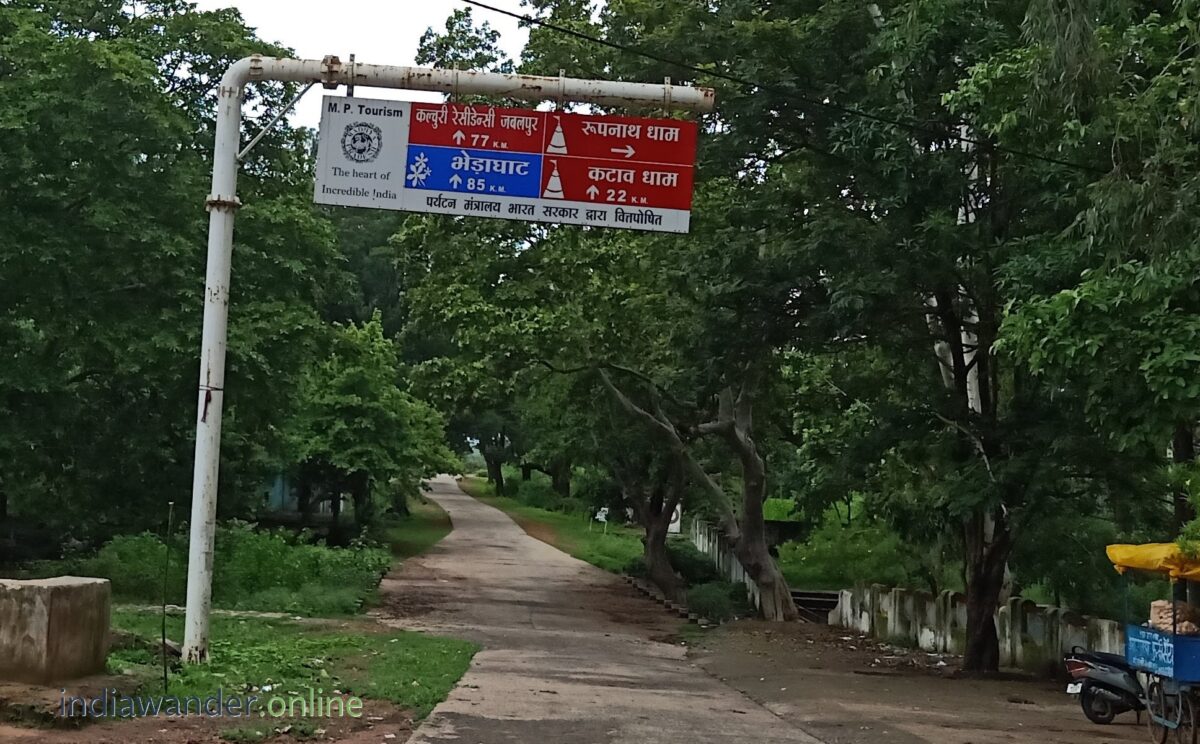
Roopnath Dham is a Famous tourist destination near Katni, surrounded by natural beauty, hills, and a diverse variety of flora. It is a famous historical and religious site located in Katni district of the state of Madhya Pradesh. This place is known for its ancient Shiva temple, natural water kund, rock inscriptions of Emperor Ashoka, and beautiful natural surroundings.
Roopnath Dham is an important destination for devotees, history lovers, and nature lovers. It is a one-day weekend destination for the Jabalpur and Katni districts. You can visit here with your family and friends and explore all the attractions of Rupnath Dham.
In this article, you will find complete information about Rupnath Dham including its history, religious importance, Ashoka inscription, how to reach, and best time to visit.
Location of Roopnath Dham
Roopnath Dham is situated in Kakarhata village, near the Bahoriband Tehsil. It is located about 5 kilometers from Bahoriband Tehsil and about 60 kilometers from the main city of Katni. You can easily reach this destination by road. A well-constructed road leads to the site, although some sections of the road are not in the best condition.
You can easily access the location using any private vehicle or public transportation. The temple is situated directly along the main road, making it very easy to access. It is an excellent place to visit and spend a pleasant time while exploring the surroundings of Katni. The site is nestled amidst hills, forests, and a rural landscape.
How to Reach Rupnath Dham?
Roopnath Dham is a beautiful tourist destination near the Katni district. You can easily reach this place from either the Katni or Jabalpur districts. A large number of tourists from neighboring districts visit this site to spend a pleasant time. This location is exceptionally beautiful and attracts a significant number of tourists, devotees, and nature enthusiasts.
The nearest railway stations to Rupnath Dham are Sihora Railway Station and Salimanabad Railway Station. You may choose either station according to your preference. However, as these are smaller stations, not every train makes a stop here. Upon arriving at the station, you can reach the temple directly by utilizing public transportation.
You can also travel here by road, as the roads leading to this destination are in excellent condition. The temple is situated on the road connecting Bahoriband to the Manjholi Tehsil, making it easily accessible. Buses operate continuously along this route, ensuring that you can reach this destination with ease.
History of Rupnath Dham
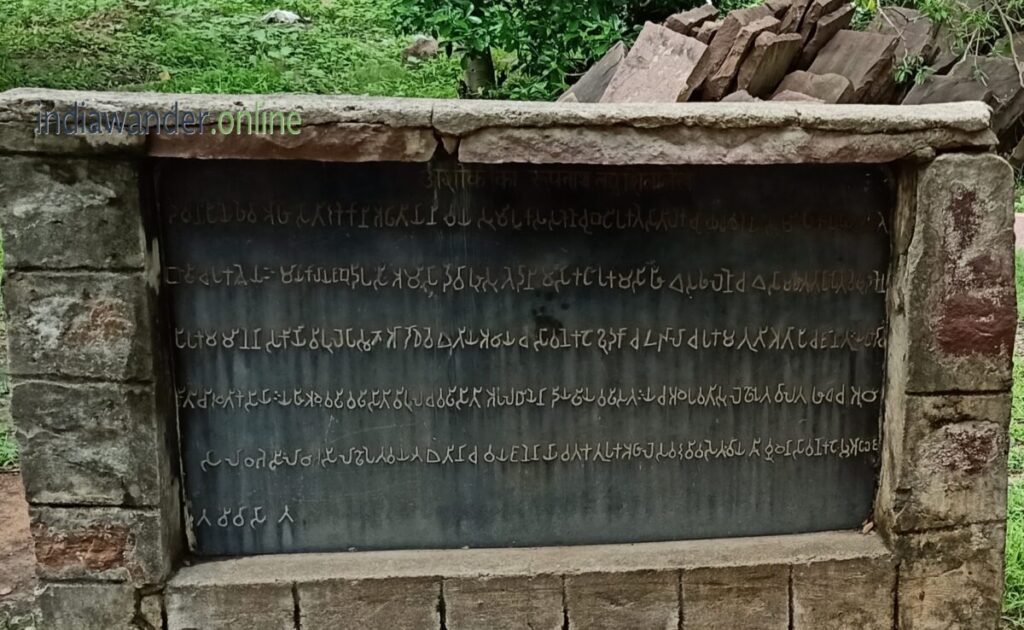
Roopnath Dham is historically important because of the rock inscriptions of Emperor Ashoka. These inscriptions are known as Ashokan edicts and were written in the 3rd century BCE during the rule of Emperor Ashoka of the Maurya Empire.
The inscription, along with its Hindi translation, can be viewed here on this site. This inscription is carved into a rock face and has been preserved in excellent condition.
These inscriptions were written on rocks to spread Ashoka’s message of peace, morality, and Buddhism. The Rupnath inscription is one of the Minor Rock Edicts of Ashoka and is an important archaeological site.
This makes Rupnath Dham not only a religious place but also an important historical site in India.
Rupnath Temple (Ancient Shiva temple and Natural Kund)
Roopnath Dham is located near Bahoriband in Katni district. The temple is dedicated to Lord Shiva and is situated in a natural rocky area surrounded by hills and forest. One of the most unique features of Rupnath Dham is the natural water kund and ancient rock inscriptions.
The most captivating feature of the Rupnath site is its Shiva temple. This temple is built atop a natural cave, presenting a visually stunning spectacle. The Shiva Lingam enshrined here is extremely ancient, and devotees flock to the site to offer their prayers and worship.
On the occasions of Mahashivratri and the Mondays of the holy month of Sawan, massive crowds gather here to seek darshan (sacred sight) of the Shiva Lingam. The location is exquisitely beautiful, and its surrounding environment is entirely natural, with the lush flora and greenery captivating the attention of every visitor.
Another feature within the Rupnath Temple complex that draws every nature lover is the presence of its water tanks. These natural tanks are situated amidst the hills, and there are three such tanks here that are truly beautiful.
During the rainy season, waterfalls cascade down from the hills, making the scenery even more captivating. These tanks are named Ram Kund, Sita Kund, and Lakshman Kund.
There is another manmade kund built in the complex. During the rainy season, when the natural pool fills to the brim and begins to overflow, its water flows into this man-made pool as well.
Furthermore, there is an ancient well located here constructed in antiquity which, too, appears remarkably unique and artistic.
Situated atop the hills above the temple lies a lake of exquisite beauty. You can reach this spot by trekking, and the scenery here is truly magnificent. From this vantage point, you can gaze out over the village fields and the entire surrounding landscape, offering a truly spectacular view.
The place is peaceful, scenic, and historically important, making it one of the most interesting places to visit in Katni district.
The temple complex includes:
- Shiva temple
- Natural water kund
- Rock inscription area
- Small caves and rocky structures
- Steps for visitors
- Open temple courtyard
Devotees take bath in the kund and then visit the Shiva temple for darshan. The place has a peaceful and spiritual atmosphere.
Ashoka Rock Inscription
One of the main attractions of Roopnath Dham is the Ashoka rock inscription. The inscription is written in Brahmi script and Prakrit language. It contains messages related to moral values, respect for elders, kindness to animals, and religious tolerance.
This inscription shows that this area was important even during ancient times and was connected to the Mauryan Empire. History students, archaeologists, and tourists often visit Rupnath Dham to see this ancient inscription.
Natural Beauty Around Rupnath Dham
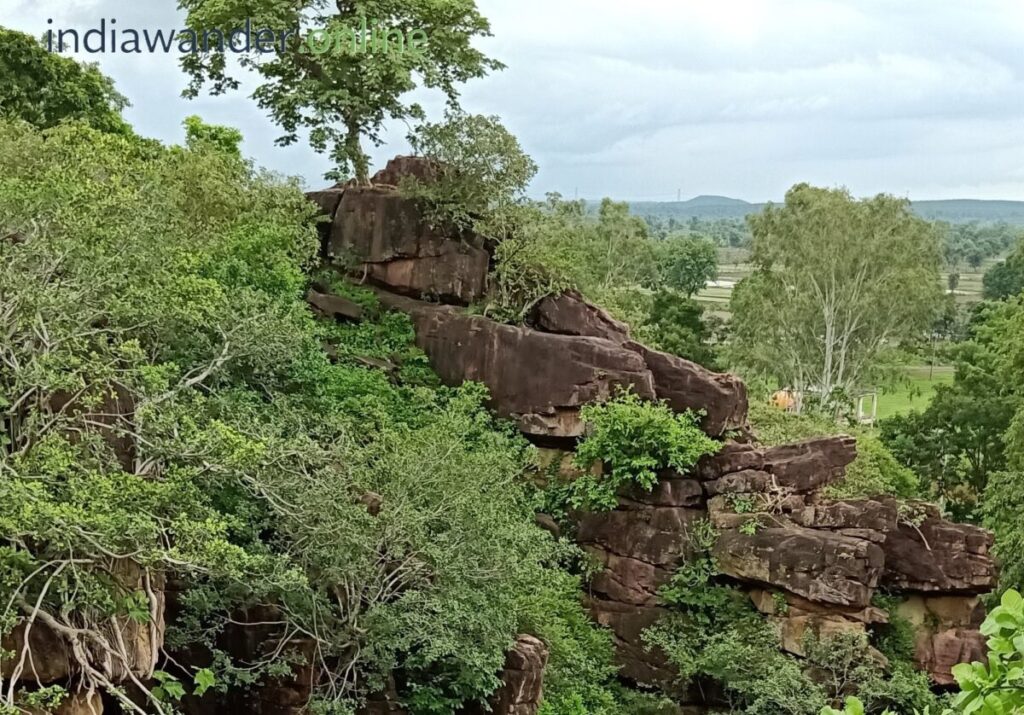
Roopnath Dham is surrounded by hills, rocks, trees, and forest area. The natural environment makes this place very beautiful, especially during the monsoon season.
Visitors can enjoy:
- Rocky hills
- Small waterfalls in monsoon
- Natural water kund
- Forest scenery
- Peaceful environment
- Photography opportunities
It is a great place for nature lovers and photographers.
Best Time to Visit Rupnath Dham
As a tourist, the best time to visit the Roopnath Dham Temple is during the winter season. This is because the weather remains pleasant during winter, allowing you to easily explore the Dham and all the surrounding areas.
You can also visit during the rainy season, as the lush greenery all around looks stunning during this time, and the waterfalls appear particularly magnificent as they are filled with water.
- October to March – Best weather
- July to September – Waterfall and greenery
- Mahashivratri – Festival time
- Shravan month – Religious importance
Places to Visit Near Rupnath Dham
If you are visiting Roopnath Dham, you can also visit nearby places:
- Bilhari
- Vijayraghavgarh Fort
- Jagriti Park
- Muhas Hanuman Temple
You can plan a one-day trip covering these places.
Travel Tips
If you are planning to visit Roopnath Dham, keep these tips in mind:
- Wear comfortable shoes
- Be careful on rocks and steps
- Carry water and snacks
- Visit in morning or evening
- Do not damage historical inscription
- Maintain cleanliness
- Good place for photography
- Suitable for family trip
Conclusion
Roopnath Dham Katni is a unique place where history, religion, and nature come together. The ancient Ashoka rock inscription, Shiva temple, natural water kund, and scenic environment make it one of the most important places to visit in Katni district. It is a perfect destination for devotees, history lovers, and travelers who want to explore offbeat places in Madhya Pradesh.
If you are visiting Katni, you should definitely visit Rupnath Dham to experience its historical importance, spiritual atmosphere, and natural beauty.