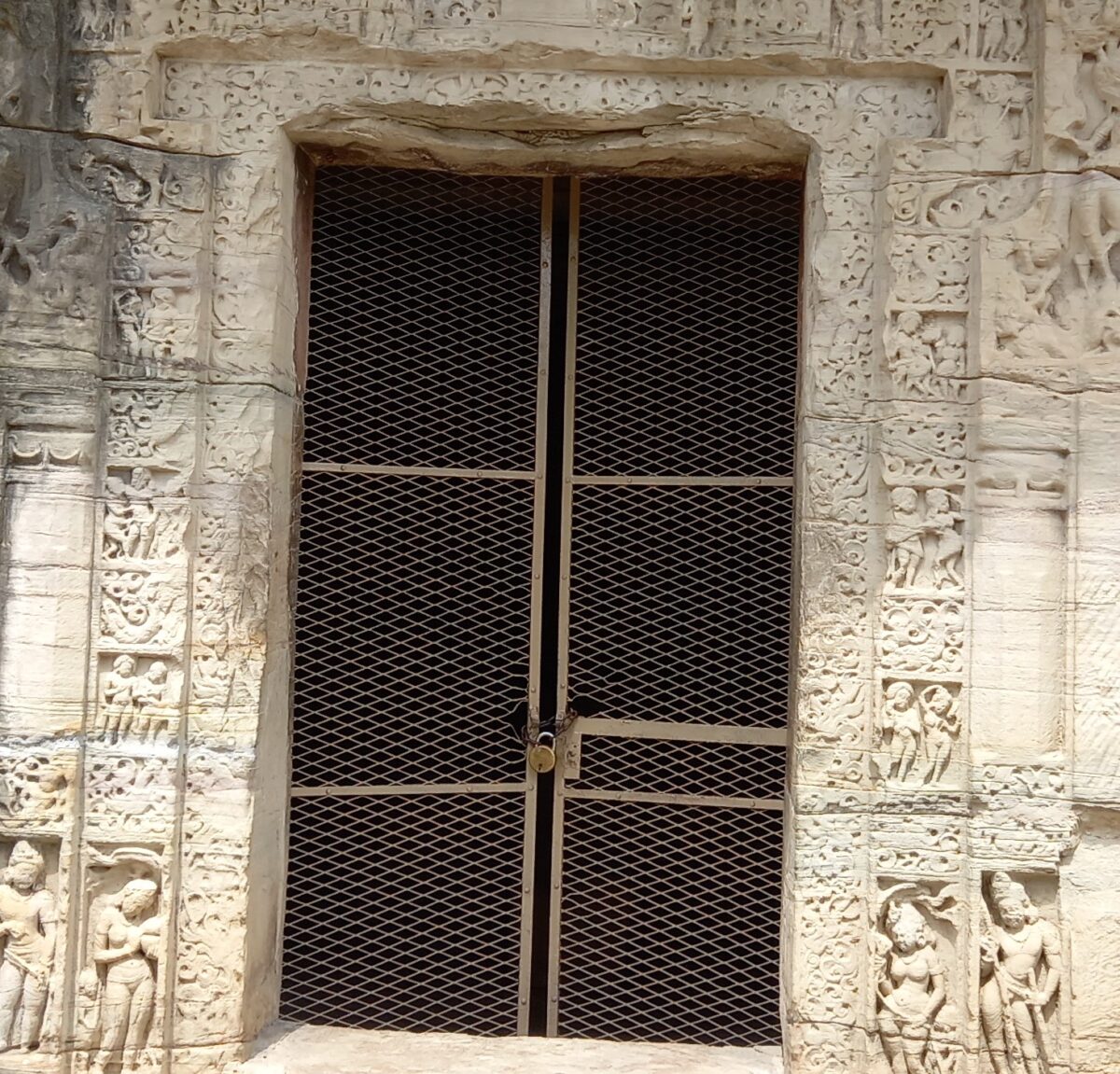
The Udayagiri Caves are a renowned historical heritage site in Madhya Pradesh. Here, you can explore 20 rock cut caves dedicated to the Hindu gods Vishnu and Shiva, dating from the early third to the fifth century.
Near the historic city of Vidisha, the Udayagiri Caves are one of the most important archaeological and religious sites in Central India. Located on the banks of the Halali River, the Udayagiri Caves are a wonderful and fascinating place for history buffs, archaeologists, and those who enjoy exploring historical sites up close.
Famous for their ancient rock-cut sculptures and Gupta-era inscriptions, these caves offer an intriguing glimpse into India’s early Hindu art and architecture.
If you’re exploring Madhya Pradesh’s heritage circuit, the Udayagiri Caves should definitely be on your trip plan. This article covers Udayagiri hills, caves, history, district details, timings, and distances from Vidisha, Sanchi, and Bhopal to help you plan your visit.
Where is Udayagiri Hills and Caves located
Udayagiri is one of the oldest caves in Indian history. Located in the Vidisha district of Madhya Pradesh, Udayagiri caves famous for rocks cut caves and sculptures carved on rocks. It is easily accessible by car or public transport.
There are good roads leading to the site. It is approximately 6 km from the headquarters of Vidisha city. Located on the banks of the Halali River, Udayagiri Hills and Caves are surrounded by beautiful green forests, wildlife and rural areas. The region is historically significant and closely connected to the ancient city of Besnagar.
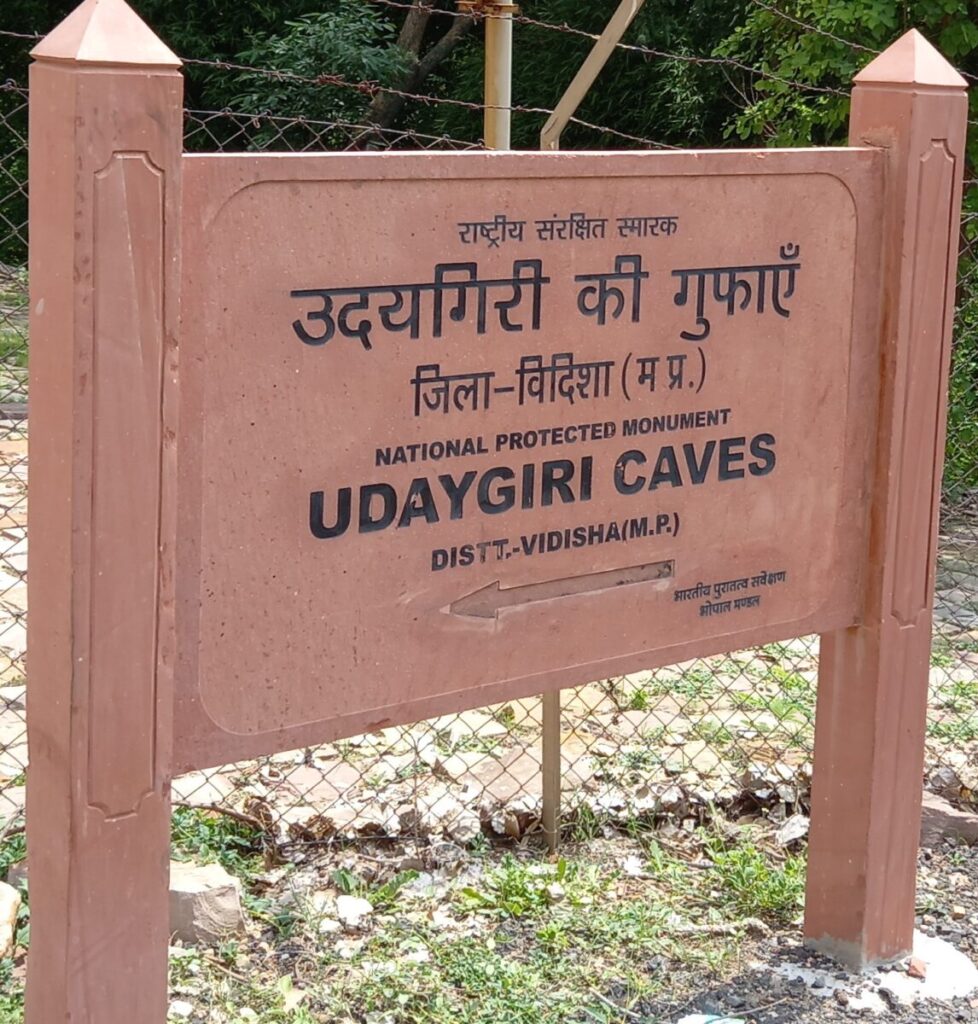
Exciting trip to Udayagiri Caves
The Udayagiri Caves are a beautiful historical monument in the Vidisha district of Madhya Pradesh. Udayagiri hills and cave is located on the banks of the Halali River, about 5 km from Vidisha headquarters. You can easily reach it by road. There is a good road leading to it.
You can travel by your own vehicle or public transport. The road is very beautiful and the entire road offers beautiful views like farms, villages and landscapes.
You can easily reach Udaygiri Hills from Vidisha city centre using road. You can take the Vidisha Ashok Nagar Highway and go straight there. After crossing the Betwa River, you can turn right and go straight for about 3 km to reach this monument.
Upon arriving, you can park your vehicle in the parking lot and purchase a ticket to enter the site. There is a museum where you can learn a lot of information about this site and other historical sites in Vidisha.
You enter the site through the entrance gate, where you see a long, narrow road along high hills. While walking on this road, you can see hills and cave, which is built on the hills.
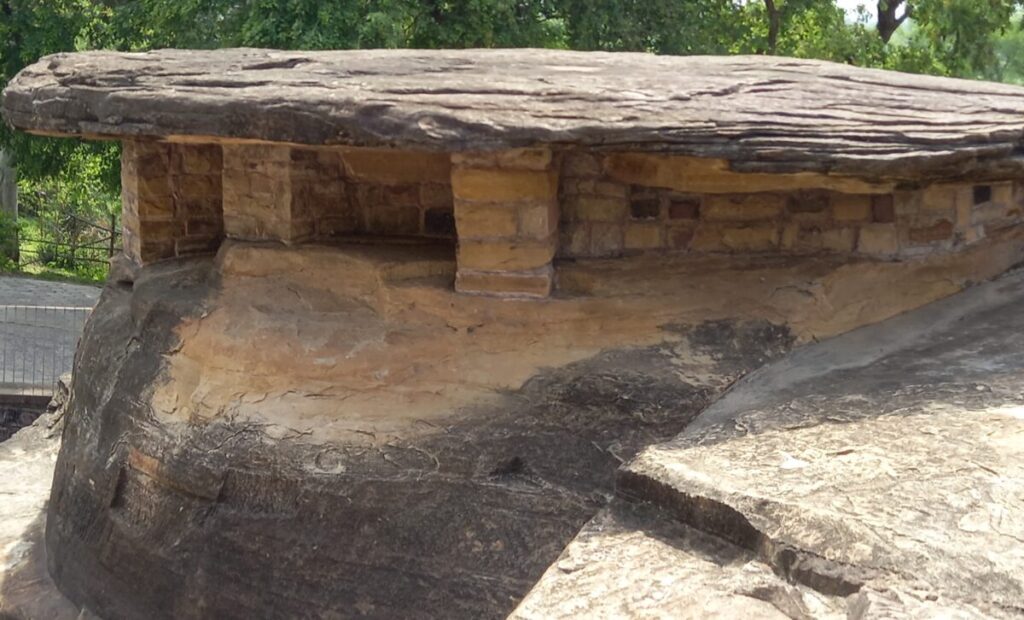
These caves are built on hills, but the caves are closed, so you can view them from the outside. Firstly, you can see Cave No. 7, also known as the Tawa Cave. The top of this cave is round and flat, resembling a pan, hence the name Tawa Cave.
Next, you’ll find Cave No. 12 and Cave No. 4. Cave No. 4 is called the Veena Cave because of the statue of a man playing the Veena in front of its entrance. Inside the cave is a Shivalinga, a one-faced Shivalinga installed in a square Jilhari.
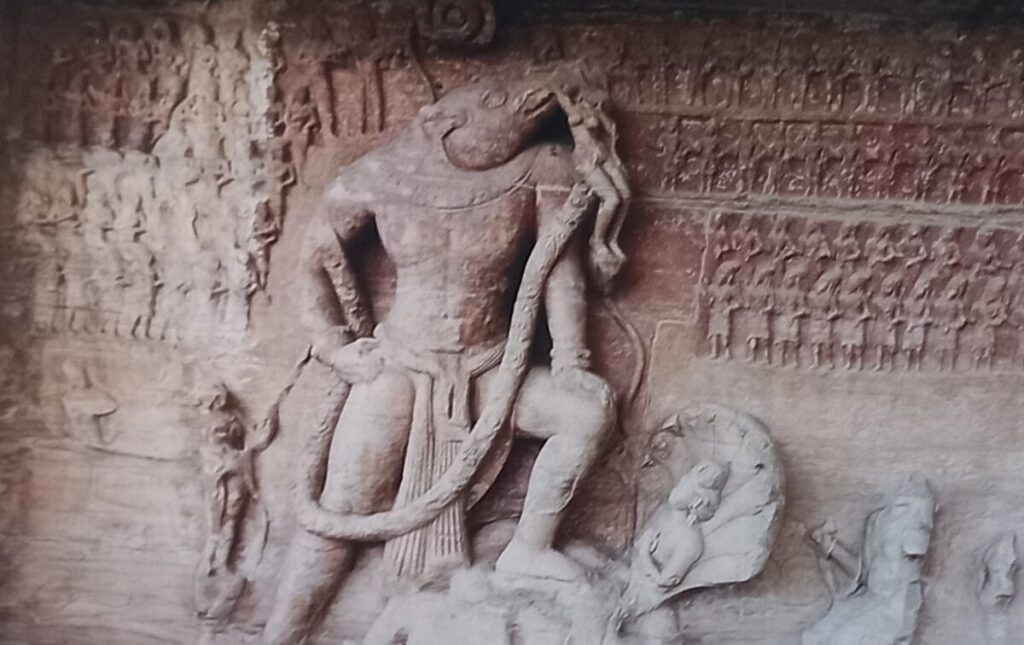
The most interesting and famous feature of the Udayagiri Cave is the Vishnu Varaha form carved on a surface in front of Cave 5. This sculpture depicts a beautiful mythological story.
It depicts the Varaha incarnation of Lord Vishnu lifting Mother Earth with their tusks and placing her in her place in the universe, while other gods and goddesses shower flowers upon her. In the sculpture, Lord Vishnu has the body of a human and the head of a boar.
Read more : Heliodorus Pillar
After seeing this sculpture, you can visit Cave 6, known as the Suryakarnika Cave. Moving ahead, you can see a beautiful rock-cut sculpture of Lord Vishnu reclining on Shesh Naga, known as Shesh Shaiya idol.
His vehicle, Garuda, is also shown seated on this statue. Here, you can see the Shankhalipi, one of the oldest scripts in Indian history. Further up, you’ll see stairs leading up the hill, where you can enjoy trekking. Trekking is very tiring, but it’s adventurous as you climb hills and get to see beautiful views of the forest, river, and wildlife.
The views of the surrounding area are spectacular, with the river flowing along the hills creating a wonderful sight. You can sit on the hills and enjoy the beautiful view. You can see many wild animals here, and peacocks roam freely. You can hear the sounds of many birds.
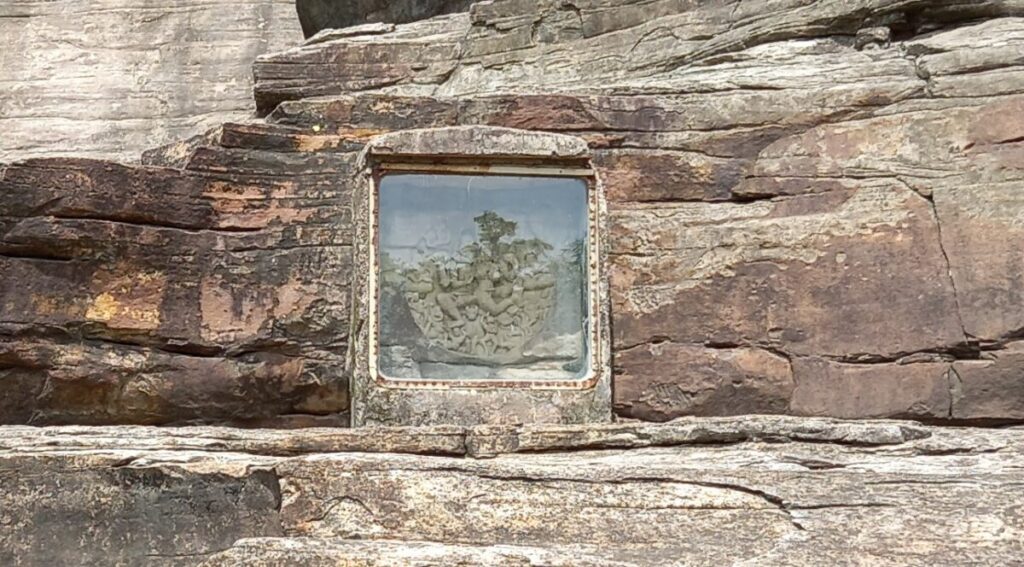
Over the hills, you can see the remains of a Gupta-era temple. Further going, you will see a rest house and Cave 20. Cave No. 20 is a Jain cave dedicated to the Jain Tirthankara Parshvanatha.
Inside the cave, statues of four Jain Tirthankaras seated in Padmasana posture have been engraved on both sides of the entrance, with a Chakra depicted below them.
Continuing further, you’ll see Cave No. 20, the largest rock-cut cave, carved like a Khoh. There are stairs leading up to it. Inside the cave, there are two rooms with statues protected by windows and walls.
Here You can see a panoramic view of the Halali River, fields, and forest. There’s a clock-like structure carved into the rock, called the Shanku Yantra.
After visiting this, you can visit Caves No. 20 and 19. Cave 19 is called the Amrit Cave because the entrance depicts the mythological story of the Samudra Manthan.
The entrance to this cave depicts the Makarvahini Ganga on one side and the Kurmavahini Yamuna on the other. An 11th-century inscription written in Sanskrit and Nagari script has also been found in this cave.
After enjoying the natural view of the cave and the hills, you can visit the museum, which contains a wealth of information about the Udayagiri Caves and the surrounding area of Vidisha.
Udayagiri History
Udayagiri history takes us back to the glorious Gupta period (4th–5th century CE). The caves were developed during the reign of Emperor Chandragupta II (Vikramaditya), one of the most powerful rulers of the Gupta dynasty.
The site contains around 20 rock-cut caves, most of which are dedicated to Hindu deities such as Vishnu, Shiva, and Durga. Some caves also show Jain influence.
One of the most famous sculptures here is the gigantic Varaha (boar) avatar of Lord Vishnu, which depicts Vishnu rescuing the Earth goddess from the cosmic ocean. This relief carving is considered one of the finest examples of Gupta art and showcases advanced craftsmanship.
The caves also contain ancient inscriptions that provide valuable information about Gupta administration, religion, and culture.
Architectural Features of Udayagiri Caves
1. Rock-Cut Design
The caves are carved directly into sandstone hills. Unlike natural caves, these are man-made sanctuaries designed for religious worship and meditation.
2. Varaha Sculpture
The highlight of Udayagiri Caves is the massive Varaha sculpture. The detailed carving represents power, protection, and divine intervention. It is one of the earliest monumental depictions of Vishnu in Indian art.
3. Cave Temples
Each cave has a unique layout. Some are small chambers with simple carvings, while others contain elaborate sculptures and inscriptions.
The site demonstrates the early development of Hindu temple architecture before free-standing temples became common.
Read more : Bija Mandal Vidisha
Udayagiri Caves Vidisha Timings
If you are planning your visit, knowing Udayagiri Caves Vidisha timings is important.
- Opening Time: 9:00 AM
- Closing Time: 5:00 PM
- Open: All days of the week
The site is managed by the Archaeological Survey of India (ASI). It is advisable to visit in the morning or late afternoon to avoid heat, especially during summer.
Vidisha to Udayagiri Caves Distance
Travelers often search for Vidisha to Udayagiri Caves distance. The distance from Vidisha town to Udayagiri Caves is approximately 6 kilometers. It takes around 10–15 minutes by car or auto-rickshaw.
Due to its close proximity, many tourists prefer to stay in Vidisha and make a short trip to the caves.
Sanchi to Udayagiri Caves Distance
Another common query is Sanchi to Udayagiri Caves distance. The distance from Sanchi Stupa to Udayagiri Caves is about 13–15 kilometers. It usually takes around 20–30 minutes by road.
Many visitors combine Sanchi and Udayagiri in a single-day trip, as both sites are historically significant and located close to each other.
Udayagiri Caves Distance from Bhopal
If you are traveling from the state capital, you might want to know the Udayagiri Caves distance from Bhopal. The caves are approximately 60–65 kilometers from Bhopal. It takes about 1.5 to 2 hours by road, depending on traffic.
The route from Bhopal to Vidisha is well connected by highway, making it convenient for a weekend trip.
Udayagiri Caves google map location
Best Time to Visit Udayagiri Caves
The ideal time to visit is between October and March, when the weather remains pleasant. Monsoon is also a good time to visit here because at this time there is greenery all around and you will see greenery everywhere.
Summers (April to June) can be extremely hot, with temperatures rising above 40°C. Winter mornings and evenings provide the best experience for sightseeing and photography.
Nearby Attractions
Udayagiri Caves are part of a larger historical circuit. You can also explore:
- Heliodorus Pillar
- Madhav Udyan
- Sanchi Stupa
Together, these attractions showcase the rich cultural and religious history of Vidisha district.
Why Udayagiri Caves Are Important
Udayagiri Caves are important because:
- They represent early Gupta-period Hindu art.
- They contain some of the oldest large-scale Hindu sculptures in India.
- They provide historical inscriptions dating back to the 5th century.
- They mark a transitional phase in Indian temple architecture.
For students of history, archaeology, and architecture, this site is extremely valuable.
Travel Tips
- Wear comfortable shoes, as you may need to climb slightly.
- Carry water, especially during summer months.
- Visit early morning for better lighting and fewer crowds.
- Respect the monument and avoid touching carvings.
- Do not write anything on the walls
Conclusion
Udayagiri Caves are a remarkable symbol of India’s ancient heritage and artistic excellence. Located in Vidisha district, just a few kilometers from the town center, these caves provide deep insight into Gupta-era history and religious traditions.
With convenient distances — Vidisha to Udayagiri Caves (5 km), Sanchi to Udayagiri Caves (15 km), and Udayagiri Caves distance from Bhopal (65 km) — the site is easily accessible for travelers.
Whether you are interested in Udayagiri history, architecture, or spiritual heritage, this ancient cave complex offers a memorable and enriching experience. If you are planning a trip to Madhya Pradesh, don’t miss this extraordinary archaeological treasure.