
Vijayraghavgarh Fort is a historic fort located in the Katni district of the state of Madhya Pradesh. The fort is situated in the town of Vijayraghavgarh, which was once a princely state and an important historical region. This fort is known for its royal history, old architecture, and cultural importance in the region.
This fort is situated on the outskirts of the town of Vijayraghavgarh. It is an excellent place to visit, although some parts of the fort have now fallen into disrepair. You can visit this historical site to enjoy its ambiance and learn more about its history.
In this article, you will give you information about Vijayraghavgarh Fort including its history, architecture, how to reach, and nearby places to visit.
Location of Vijayraghavgarh Fort
Vijayraghavgarh Fort is situated on the outskirts of the town of Vijayraghavgarh. Vijayraghavgarh is a tehsil (administrative subdivision) within the Katni district and is located about 30 kilometers from the city of Katni. It is easily accessible by road.
Vijayraghavgarh Town itself is remarkably beautiful and steeped in history. In ancient times, this used to be the princely estate of the son of the King of Maihar. This city is situated near the Kaimur Hills. You can easily reach it using your private vehicle or public transport. The place is surrounded by rivers and beautiful hills.
Within the town of Vijayraghavgarh, there are several places you can visit to spend a pleasant time. One such place is the Vijayraghavgarh Fort, which is situated just outside the town.
Vijayraghavgarh Fort Google Map location
How to Reach Vijayraghavgarh Fort?
Vijayraghavgarh Fort is a historic and beautiful fort in the Katni district. You can easily reach it using either your private vehicle or public transportation. The Vijayraghavgarh Tehsil is situated about 30 kilometers away from the main headquarters of Katni city.
The fort is well-connected by road and is easily accessible by vehicle. The roads in this area are well-maintained. The fort is located about 1 kilometer from the main town. After getting off from the bus in main town, you can even reach it on foot.
Vijayraghavgarh Fort is situated about 34 kilometers from the Katni Railway Station. Katni serves as the nearest railway station to this location. Therefore, you can easily reach Katni by train from other major cities and then travel to the fort from there by road.
The nearest airport to Vijayraghavgarh is Jabalpur Airport. It is located approximately 130 kilometers away from the Vijayraghavgarh Tehsil. If you wish to travel here by air, you should first fly to Jabalpur and then proceed to Vijayraghavgarh by road.
History of Vijayraghavgarh Fort
Vijayraghavgarh was once a princely state ruled by local kings. The fort was built as a royal residence and administrative center. The rulers governed the surrounding region from this fort and the town developed around it.
Vijayraghavgarh Fort, constructed in 1826 by Thakur Prayag Das, the son of King Basin Singh of Maihar. This fort is dedicated to Lord Vijayraghav. The fort showcases a unique fusion of Rajput and Mughal architectural styles.
Its walls, structure, paintings and intricate carvings reflect the rich cultural heritage of the region. The fort played a pivotal role in the Indian freedom struggle, particularly during the Revolt of 1857.
The King Sarju Prasad of Vijayraghavgarh was one of the most heroic figure of 1857 in the Jabalpur area. Towards the end of 1857, he sounded the bugle of rebellion. After assassinating Tehsildar Sabat Ali and seizing a mail horse, he defeated the British troops that were advancing toward Vijayraghavgarh.
Shortly thereafter, British forces aided by loyal troops from Rewalaunched an assault on Vijayraghavgarh, and the fort became the theater of a fierce battle. It is said that Veer Naini the wife of Ram Bol, one of Sarju Prasad’s key associates sacrificed her life while defending the fort. Sarju Prasad managed to escape from the fort, which subsequently fell under British control.
Trip to Vijayraghavgarh Fort
Vijayraghavgarh Fort is located in Vijayraghavgarh town, around 35–40 km from Katni. The fort complex includes palace buildings, temples, courtyards, and defensive walls. Even today, parts of the fort are standing and show the architectural style of the Bundelkhand region.
A journey to the Vijayraghavgarh Fort is a truly exciting experience, offering you the opportunity to explore this ancient fortress and delve into its history. It is easily accessible by road, and a spacious parking area for vehicles is available just outside the fort premises.
Reaching the site is hassle-free, and there is no entry fee required for admission. The fort is encircled by a deep moat (trench). In ancient times, this moat served as a crucial defensive barrier against enemies. Enemies who fell into it would meet their demise. The moat was inhabited by venomous snakes and crocodiles, ensuring that any enemy who plunged in would inevitably perish.
A magnificent main gateway serves as the entrance to the fort. There are, in fact, two entryways, both of which are exquisitely beautiful. Upon entering the fort, you will encounter the ‘Rang Mahal’ (Palace of Colors). The Rang Mahal is considered one of the most beautiful palaces within the Vijay Raghavgarh Fort complex.
This structure attracts a large number of tourists, largely due to its stunning architecture, which is spread across two beautifully constructed levels. The interior walls of the palace are adorned with exquisite paintings, while the intricate architectural designs on the ceilings hold a particular allure for visitors.
After exploring the Rang Mahal, you can proceed to the ‘Raja-Rani Mahal’ (King and Queen’s Palace), which also serves as the gateway to the main fort area. Here, you can view the elegant private chambers of the King and Queen. The very rooms where the royal couple resided in ancient times.
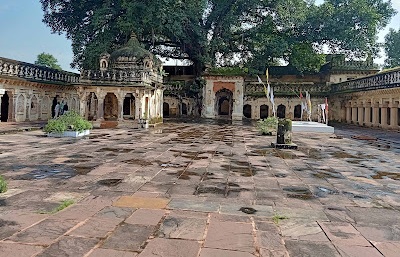
After visiting Raja-Rani Mahal, You can enter the main fort complex, which features a vast central courtyard (Chowk). Surrounding this courtyard is a corridor lined with various rooms, creating a visually stunning aesthetic.
Situated in the center of the courtyard is a ‘Samadhi Sthal’ (memorial shrine) dedicated to ‘Sadhu Maharaj.’ A large raised platform has been built to dedicate the Sadhu Maharaj. A large number of devotees visit this sacred site to offer their prayers and pay their respects.
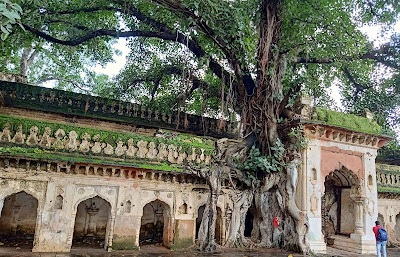
The complex also houses a very ancient Banyan tree, famous for its unique, ‘human-like’ shape. Indeed, many tourists visit this site specifically to catch a glimpse of this remarkable tree. You may also ascend to the upper floor of the palace to continue your exploration.
Stairs are provided for ascending, from where you can enjoy a panoramic view of the surroundings of the fort. Half of the fort is open to tourists, while the other half remains closed. Thus, you can enjoy exploring the entire fort for approximately one to two hours.
Architecture of Vijayraghavgarh Fort
The architecture of Vijayraghavgarh Fort reflects a mix of Rajput, Mughal and Bundelkhand style construction. The fort complex includes:
- Main entrance gate
- Palace buildings
- Courtyards
- Temples
- Fort walls
- Residential areas
- Old administrative buildings
The fort was built using sand stone and lime mortar, which was common in historical forts. The entrance gate of the fort is large and strong, designed for protection against enemies.
Inside the fort, there are palace structures where the king and royal family lived. These structures include large rooms, halls, balconies, and open courtyards. Some parts of the palace show beautiful arches and traditional designs.
Although some parts of the fort are now damaged, the remaining structures still show the grandeur of the old royal residence.
Cultural and Historical Importance
Vijayraghavgarh Fort is not just a building but an important historical site for the Katni region. It represents:
- History of princely states
- Bundelkhand architecture
- Royal lifestyle of local kings
- Cultural heritage of the region
- Ancient administrative centers
The fort and town together tell the story of how small kingdoms ruled different regions before independence.
Best Time to Visit Vijayraghavgarh Fort
The best time to visit the fort is from October to March when the weather is pleasant and comfortable for exploring the fort area. At this time, you can easily reach there and explore the entire fort at your leisure.
You can also visit during the monsoon season (July to September) when the surrounding area becomes green and beautiful.
Avoid visiting in the afternoon during summer because the temperature becomes very high.
Places to Visit Near Vijayraghavgarh
If you are visiting Vijayraghavgarh Fort, you can also visit nearby places:
- Jagriti Park
- Jagannath Temple Katni
- Badera Chaturyug Dham Temple
- Katni city tour
- Bilhari
- Katai Ghat
- Rupnath Temple
- Kankali Devi Temple
You can plan a one-day historical and religious trip in Katni district.
Travel Tips for Visitors
If you are planning to visit Vijayraghavgarh Fort, keep these tips in mind:
- Wear comfortable shoes
- Carry drinking water
- Visit in morning or evening
- Be careful in ruined areas
- Respect historical structures
- Do not litter
- Good place for photography
- Good place for history lovers
Conclusion
Vijayraghavgarh Fort Katni is an important historical fort that reflects the royal history and cultural heritage of the Katni region. The fort, palace structures, temples, and old buildings show the lifestyle of the rulers who once governed this region. Although parts of the fort are now in ruins, it still remains an important historical and tourist place in Katni district.
If you are interested in history, forts, and heritage places, then Vijayraghavgarh Fort is definitely worth visiting when you are in Katni. It is a great place to learn about local history, explore old architecture, and enjoy a peaceful historical environment.