Bajnamath Temple is one of the most famous pilgrimage sites and spiritually significant temples located in Jabalpur, Madhya Pradesh. It is a historical site, built by the Gond king Sangram Shah. The temple is famous for its Tantric rituals.
Surrounded by a peaceful environment, Bajnamath Temple attracts devotees, history lovers, and travelers who seek calm and spiritual connection.
Devotees and visitors come here daily to darshan of Kaal Bhairav Maharaj and Shani Bhagwan Ji. People believe that seeing Shani Maharaj and Kaal Bhairav provides relief from grahadosh and physical ailments.
Location of Bajnamath Temple Jabalpur
Bajnamath Temple is situated in the Jabalpur district of Madhya Pradesh. The temple lies in a calm area away from heavy city traffic, making it an ideal place for meditation and prayer.
Bajnamath Temple is located on Medical Road near Shastri Nagar. You can easily reach by road using vehicle or public transportation. Regular auto and metro buses run to reach this temple.
The temple is approximately 1 km from the main road and is easily accessible. The temple is located on a hilltop, and there are 50 to 60 steps to reach it. Due to its location, visitors can visit the temple as well as other attractions around Jabalpur.
Read more : Jhoteshwar Temple Narsinghpur
Peaceful Place in Bajnamath Temple
Bajnamath Temple is a famous temple dedicated to Lord Bhairavnath in Jabalpur, Madhya Pradesh. This temple is ancient and renowned for its Tantric rituals and serene atmosphere.
It is a peaceful and spiritual place that attracts devotees seeking the blessings and peace of mind. The temple complex includes the Shani Dev Temple, Hanuman Temple, Kali Temple, and Lord Shiva Temple.
When you reach at the temple, there is a parking area where you can park your vehicle, and a good road leads to the temple. There are several shops on both sides of the road where you can purchase offerings.
There are stairs to reach this temple and after entering the temple premises you feel a lot of positive and spiritual energy. The temple complex is clean and well-maintained, with abundant trees and plants.
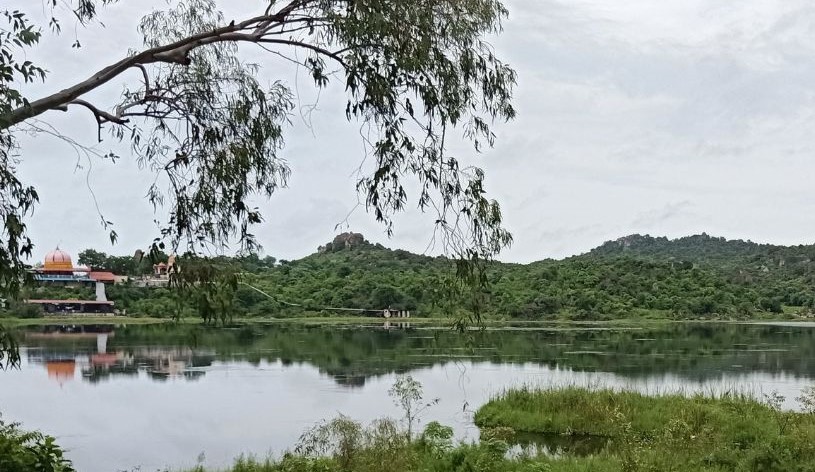
A large lake in front of the temple, called Sangram Sagar Lake, creates a beautiful and calm atmosphere for devotees and those seeking peace.
The main temple is called the Tantric Math. Inside the main temple, you will see a beautiful, old idol of Lord Bhairavnath. This idol is very beautiful and attractive.
In the open space outside the Bhairavnath Temple, you can see a statue of Shani Dev, which is very old and attractive. Every Saturday, many devotees come here and offer mustard oil to the idol of Shani.
The temple complex includes the Maa Durga Temple and the Hanuman Temple, and a short distance from the main temple, on the banks of Sangram Sagar Lake, is the Kali Mata Temple.
Inside the temple, you’ll find an old and beautiful statue of Kali Mata. There’s a beautiful ghat on the banks of Sangram Sagar Lake, where you can sit and enjoy the views.
Read more : Kachnar City Shiva Temple Jabalpur
Historical Significance of Bajnamath Temple
Bajnamath Temple is believed to be an ancient temple, possibly dating back several centuries. Though detailed historical records are limited, local traditions suggest that the temple was built during the early medieval period.
This temple was built by Sangram Shah in the 16th century, approximately between 1510 and 1543. He visited the temple daily to worship the idol of Bhairav Baba, a childlike figure of Bhairav in the sanctum sanctorum.
Small aale are carved outside the temple walls. In ancient times, idols of various deities were installed there. The temple’s distinctive feature is its large sanctum sanctorum.
Architecture of Bajnamath Temple
The architecture of Bajnamath Temple is simple yet graceful, reflecting traditional temple design. This temple is very old and is built in the Mughal style, which looks very beautiful.
The temple has a large dome on the roof which looks very magnificent and inside the temple there are old idols of Bhairavnath and the Kali temple is also very old and small and has old idols of Kali Mata.
Religious Importance of Bajnamath Temple
Bajnamath Temple is dedicated to Bhairavnath, one of the most worshipped deities in Hinduism. Devotees believe that praying here brings:
- Inner peace
- Relief from stress
- Blessings for family and health
Best Time to Visit Bajnamath Temple
The best time to visit Bajnamath Temple is from October to March, as the weather is pleasant and suitable for traveling.
During winter, you can comfortably visit the temple. Winter is a great time to explore this temple and other attractions in Jabalpur.
March to June is the summer season; you should avoid visiting this temple during the afternoon as it can be very hot outside. It is recommended to visit in the morning or evening during the summer season.
July to September is the monsoon season, making it a good time to visit this temple, as the temple is surrounded by greenery and the lake is full of water. The temple remains open throughout the year.
Timings and Entry Fee
- Timings: The temple is generally open in the morning and evening. You can visit the temple from 6 AM to 11 AM and from 5 PM to 9 PM.
- Entry Fee: Free
Exact timings may vary on festivals and special days.
How to Reach Bajnamath Temple
How to reach Bajnamath Temple By Road
To reach this temple, you can easily get auto or taxi from every corner of Jabalpur. Local autos, taxis, and buses from Jabalpur city easily reach the temple. You can reach this temple by booking an auto from Ola.
How to reach Bajnamath Temple By Train
The nearest railway station is Jabalpur Railway Station, which is well connected to major Indian cities. Direct trains arrive in Jabalpur from Bhopal, Indore, Ujjain, Amarkantak, and several other major cities.
Upon reaching Jabalpur Railway Station, you can find metro buses and autos outside the station to reach this temple.
How to reach Bajnamath Temple By Air
The nearest airport is Jabalpur Airport (Dumna Airport), around 15–20 km away. You can reach this temple from the airport by auto or metro bus. You can also book an auto through Ola to reach this temple.
Bajnamath Temple Google Map Location
Things to Do at Bajnamath Temple
- Offer prayers to Lord Bhairavnath
- Participate in aarti and rituals
- Meditate in the peaceful environment
- Observe traditional temple practices
The calm surroundings make it ideal for spiritual reflection.
Nearby Places to Visit
After visiting Bajnamath Temple, you can explore other attractions in Jabalpur:
- Madan Mahal Fort
- Rani Durgavati Museum
- Bhedaghat Marble Rocks
- Dhuandhar Waterfall
These places together offer a complete travel experience.
Cultural Importance in Jabalpur
Bajnamath Temple may not be very famous among tourists, but it holds a special place in the hearts of local residents. It represents:
- Ancient Bhairavnath worship traditions
- Local faith and devotion
- Cultural continuity
Such temples play an important role in preserving regional religious identity.
Travel Tips for Visitors
- Dress modestly
- Maintain silence inside the temple
- Avoid littering
- Visit during morning hours for a peaceful experience
- If you want to stay here for a long time, you can carry water bottles and food.
Conclusion
Bajnamath Temple Jabalpur is a hidden spiritual gem that reflects the deep devotion to Lord Bhairavnath in central India. Its ancient roots, peaceful surroundings, and religious importance make it a meaningful place to visit.
If you are exploring religious or historical places in Jabalpur, a visit to Bajnamath Temple will offer you a calm and spiritually enriching experience.
Bajnamath Temple & Sangram Sagar Lake, Jabalpur – FAQs
1. How do I get directions to Bajnamath Temple, Jabalpur?
Bajnamath Temple is located near Sangram Sagar Lake in the Madan Mahal area of Jabalpur. It is well connected by road and can be reached by car, taxi, auto-rickshaw, or two-wheeler from any part of the city.
2. What is the distance from Bajnamath Temple to Jabalpur?
Bajnamath Temple is approximately:
- 7 km from Jabalpur Junction Railway Station
- 2 km from Madan Mahal Railway Station
- 18 km from Dumna Airport
Travel time from the city centre is about 20–25 minutes.
3. Why is Bajnamath Temple famous as a Tantrik Mandir?
Bajnamath Temple is regarded by many devotees as a Tantrik temple because it has long been associated with Tantric worship and meditation practices dedicated to Lord Shiva. Local traditions say saints and ascetics performed spiritual rituals here. While this belief is popular among devotees, historical evidence documenting specific Tantric practices is limited.
4. Where is Bajnamath Temple located?
Bajnamath Temple is located near Sangram Sagar Lake, close to Madan Mahal Fort, in Jabalpur, Madhya Pradesh.
5. Who built Bajnamath Temple?
The temple is believed to have been built during the Gond dynasty, most likely under the patronage of Raja Sangram Shah, who ruled the Gond kingdom in the 16th century.
6. What are the timings of Bajnamath Temple?
The temple is generally open:
- 6:00 AM – 9:00 PM
- Open every day
Timings may be extended during Mahashivratri and other major Hindu festivals.
7. What is the ideal day to visit Bajnamath Temple?
The best days to visit are:
- Monday (dedicated to Lord Shiva)
- Mahashivratri
- During the Shravan (Sawan) month
- Early mornings for a peaceful experience.
8. Which deity is worshipped at Bajnamath Temple?
Bajnamath Temple is dedicated to Lord Shiva and houses an ancient Shivling that attracts devotees throughout the year.
9. How old is Bajnamath Temple?
The temple is estimated to be around 500 years old and dates back to the Gond period, making it one of Jabalpur’s important historical temples.
10. Which area is Bajnamath Temple located in?
The temple is situated in the Madan Mahal–Sangram Sagar area of Jabalpur, close to Madan Mahal Fort and Balancing Rock.
11. What are the nearby attractions to Bajnamath Temple?
Nearby attractions include:
- Madan Mahal Fort
- Sangram Sagar Lake
- Balancing Rock
- Rani Durgavati Museum
- Bhawartal Garden
12. What are the best things to do at Bajnamath Temple?
Visitors can:
- Offer prayers to Lord Shiva.
- Explore the temple’s historic architecture.
- Enjoy views of Sangram Sagar Lake.
- Visit Madan Mahal Fort nearby.
- Take photographs of the surrounding heritage sites.
- Spend time in meditation and peaceful surroundings.
13. How can I reach Bajnamath Temple by road?
You can reach the temple via:
- Private car or bike
- Taxi or app-based cab
- Auto-rickshaw from Jabalpur city
- Local buses to the Madan Mahal area, followed by a short walk or auto ride
14. Where is Sangram Sagar Lake?
Sangram Sagar Lake is located in the Madan Mahal area of Jabalpur, Madhya Pradesh, near Madan Mahal Fort and Bajnamath Temple.
15. What is Sangram Sagar Lake known for?
Sangram Sagar Lake is famous for:
- Its historical connection with the Gond dynasty.
- Scenic surroundings.
- Birdwatching opportunities.
- Views of Madan Mahal Fort.
- Peaceful atmosphere for photography and nature walks.
16. When was Sangram Sagar Lake built?
The lake was constructed during the 16th century by the Gond rulers, traditionally attributed to Raja Sangram Shah, to serve as a water reservoir for the region.
17. Where is Sagar Lake located?
Sangram Sagar Lake is situated in Jabalpur, Madhya Pradesh, adjacent to Madan Mahal Fort and within a few kilometres of the city centre.
18. What is the best time to visit Sangram Sagar Lake?
The best time to visit is:
- October to March for pleasant weather.
- Early morning for birdwatching.
- Late afternoon or sunset for scenic views and photography.
- During the monsoon, when the lake is full and surrounded by greenery.
19. Is Sangram Sagar Lake a good place for birdwatching?
Yes. Sangram Sagar Lake is one of Jabalpur’s popular birdwatching spots. During winter, visitors can observe a variety of resident and migratory birds, making it a favourite destination for bird photographers and nature enthusiasts.