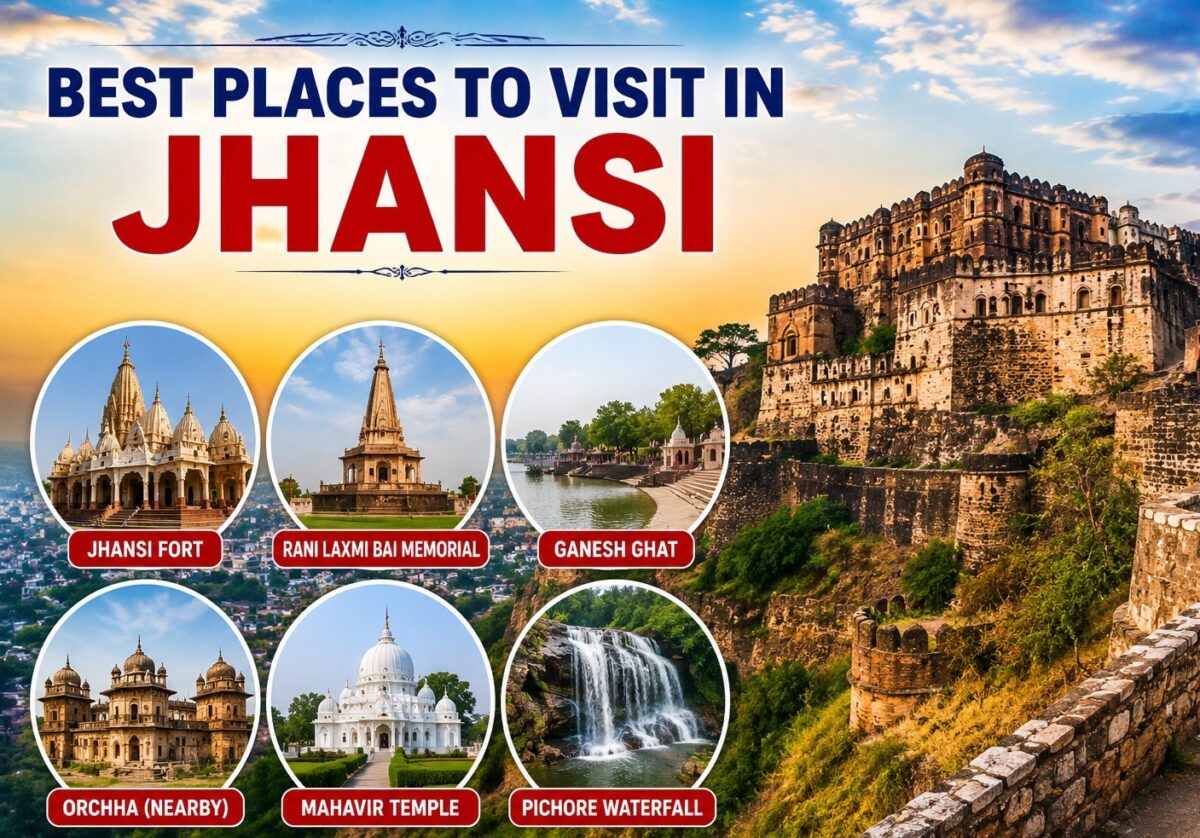
Jhansi is a major district in Uttar Pradesh, located in the northern part of the state. It shares its border with the state of Madhya Pradesh. The city is situated right on the border between Uttar Pradesh and Madhya Pradesh.
It is a city that holds a special place in Indian history. There are many places to visit in Jhansi where you can spend a wonderful time. It is known as a land of bravery and sacrifice. Jhansi is closely associated with Rani Lakshmibai, one of the most celebrated freedom fighters of India.
There are many rivers flow through the Jhansi district. One of the main rivers is the ‘Pahuj‘, which passes through the heart of the city and serves as the primary source of drinking water for the district. The Betwa River also flows through Jhansi, it forms the boundary between Jhansi and the rest of Uttar Pradesh and is crucial for irrigating the city’s land.
The city is rich in historical monuments, ancient temples, forts, and scenic spots that attract tourists throughout the year. Whether you are a history enthusiast, a spiritual traveler, or someone looking to explore the cultural heritage of Bundelkhand, Jhansi offers plenty of fascinating attractions.
In this guide, we explore the Best Places to visit in Jhansi and what makes each destination worth your time.
Best Places to Visit in Jhansi Uttar Pradesh
Jhansi Fort
Jhansi Fort is undoubtedly the most famous tourist attraction in the city. It is truly a remarkable historical site and one of India’s oldest and massive forts. Situated right in the heart of Jhansi city, the fort is easily accessible by road.
It is a beautiful structure featuring numerous spots to explore and spend time in tranquility, with each location holding its own historical significance. Built in the 17th century by Raja Bir Singh Deo of Orchha, the fort stands proudly on a rocky hill overlooking the city.
The fort gained historical significance during the Revolt of 1857 when Rani Lakshmibai fought bravely against British forces. Visitors can explore massive gates, ancient cannons, temples, and watchtowers inside the fort. One of the major attractions is the spot from where Rani Lakshmibai is believed to have escaped with her adopted son tied to her back.
The fort also provides panoramic views of Jhansi city, making it a favorite destination for photographers and history lovers.
Places worth visiting inside Jhansi Fort
Bhavani Shankar Cannon
The Bhavani Shankar Cannon is one of the main attractions of Jhansi Fort. It is located near the Ganesh Temple within the fort complex. This unique cannon measures about 10 feet in length.
It is named ‘Bhavani Shankar’ because it is believed to have derived its power from Goddess Bhavani and Lord Shankar. You can see carvings of a crocodile on the front of the cannon and an elephant on the rear.
Ganesh Temple
The Ganesh Temple, situated within the Jhansi Fort complex, is a beautiful temple structure. It is a two-story temple dedicated to Lord Ganesh, built in the traditional Maratha style. The temple’s entrance is adorned with arched architectural features.
The temple was very popular until the fort was taken over by the British. Rani Lakshmi Bai paid regular visit to this temple for worship. Entered through arched entrance, it comeprises a courtyard, mandap and garbhgrah, ceiling of the latter being decorated with various geometrical and floral pattern.
Samadhi Sthal
Samadhi Sthal in Jhansi fort, is the site where you can see the memorials and graves of key figures who played a pivotal role in the Revolution of 1857. It houses the memorials of Ghulam Ghaus Khan (chief artilleryman), Motibai (female artillerywoman), and Khudabakhsh (cavalry leader). All three laid down their lives in battle on April 4, 1858.
Kaal Kothari
Kaal Kothari is a prison cell located near the Panch Mahal within the Jhansi Fort. It is visually striking and was used by the British government to confine prisoners.
Panchmahal
Panchmahal is a main part of Jhansi Fort, it is the first structure one sees upon entering the fort. It was built by Raja Bir Singh Deo. Originally, the palace had five stories. It is said that Rani Lakshmibai used the ground floor, which served as her meeting hall, while she resided in a room on the first floor.
The upper stories of the palace were added during British rule. Investigations by the Archaeological Department have also revealed remains of a drainage system within the palace.
Jumping Point
While visiting the Jhansi Fort, the ‘Jumping Point’ is a must-see, especially if you are interested in Rani Lakshmibai and her history. It is a historic site. It is believed that this is where Rani Lakshmibai jumped down on horseback from a height of 20 feet to escape the British army that day and later fight against them again in Gwalior.
Rani Mahal
Rani Mahal, or the Queen’s Palace, is another important historical monument in Jhansi. Once the residence of Rani Lakshmibai, the palace showcases beautiful architecture and artistic craftsmanship. This palace is situated in the heart of the city and is easily accessible. It is a beautiful palace. The entry ticket costs ₹25 per person, while foreign tourists are charged ₹300.
Known as ‘Rani Mahal’, it remains open from sunset to sunrise and was built by Raghunath II of the Navalkar family. The palace features colorful murals, intricate floral designs, and elegant arches. Today, it houses a museum displaying sculptures and artifacts dating back to the Chandela dynasty.
Visitors can learn about the region’s history while admiring the beauty of this well-preserved structure. The peaceful atmosphere and historical significance make it a must-visit attraction.
Highlights:
- Ancient sculptures
- Colorful wall paintings
- Historical museum
Government Museum Jhansi
For those interested in history and archaeology, the Government Museum is one of the best places to visit in Jhansi. This museum is located in the heart of the city, near Jhansi Fort. You can easily reach it by road, and parking facilities are also available.
You need to purchase a ticket for entry, which is very reasonably priced. The museum is open from 10:30 AM to 4:30 PM and remains closed on Mondays.
The museum contains a vast collection of weapons, manuscripts, coins, paintings, and sculptures from various periods of Indian history. Several exhibits are dedicated to Rani Lakshmibai and the First War of Independence.
The museum provides valuable insights into the culture and heritage of Bundelkhand and is an excellent place for students and researchers.
Timings: Usually open from morning to evening except Mondays.
St. Jude’s Shrine
St. Jude’s Shrine is one of the most famous Christian pilgrimage centers in North India. Thousands of devotees visit this church every year seeking blessings and spiritual peace. It is located in the heart of the city and is easily accessible. It is a great place to visit near Jhansi Railway Station.
The church is beautifully constructed, and the atmosphere is generally very peaceful. You can visit to offer prayers. It is one of the finest churches in Jhansi. It was built by Francis Xavier Fenech and features a beautiful church along with a large garden. This shrine, belonging to the Roman Catholic Latin Rite, is dedicated to St. Jude Thaddeus and falls under the Roman Catholic Diocese of Jhansi.
The shrine attracts visitors from different religious backgrounds. The annual feast celebrated in October is a major event drawing large crowds.
The peaceful surroundings and beautiful architecture make it an ideal place for prayer and reflection.
Panchatantra Park
Panchatantra Park is a popular recreational spot for families and children. Inspired by the famous Panchatantra stories, the park features attractive animal sculptures, gardens, and play areas. It is located right in the heart of the city and is easily accessible.
The entry fee is ₹10 per person, making it an affordable place to visit. It is a popular spot for evening strolls and for children to have fun. The well-maintained lawns and colorful surroundings provide a relaxing environment for visitors. It is an excellent place for morning walks, picnics, and family outings.
Children especially enjoy the themed statues depicting characters from traditional Indian stories.
Barua fort and Barua Sagar
Barua Fort and Baruasagar a beautiful natural and historical site near the city of Jhansi. Located about 25 kilometers from the Jhansi district headquarters, the town is easily accessible. The Barua sagar town area is picturesque, surrounded by hills and a lake.
Barua Sagar is a beautiful destination known for its historic fort and scenic lake. A fort, known as Barua Fort, stands atop the hill, while a large lake called Baruasagar lies at its base.
Barua Sagar Fort was built by Raja Udit Singh of Orchha and stands near the picturesque Barua Sagar Lake. The combination of historical architecture and natural beauty makes this place a favorite among tourists.
You can visit here during the monsoon season and enjoy the magnificent scenery. During monsoon time, the lake fills to the brim and overflows to form a beautiful waterfall. A small temple dedicated to Lord Shiva is located right next to where the water flows.
Visitors can enjoy boating, photography, and peaceful walks along the lakeside while exploring the ancient fort.
Orchha
Although technically located in neighboring Madhya Pradesh, Orchha is only around 18 kilometers from Jhansi and is often included in Jhansi travel itineraries. Orchha is a small and very beautiful town, and the Betwa River flows through it.
Orchha is famous for its magnificent palaces, temples, and cenotaphs built by Bundela rulers. Attractions like Jahangir Mahal, Raja Mahal, Ram Raja Temple, and Chaturbhuj Temple showcase stunning architecture.
The Betwa River flowing alongside Orchha adds to its charm, making it one of the most beautiful heritage destinations near Jhansi.
Ganesh Mandir
Ganesh Mandir is one of the oldest temples in Jhansi and holds great religious significance among local residents. The temple is dedicated to Lord Ganesha and attracts devotees throughout the year.
This temple is of great historical significance and is located near Bada Bazar in Jhansi. It is easily accessible, and the temple has stood here since the time of Maharani Lakshmibai’s wedding. It is particularly crowded during Ganesh Chaturthi when special prayers and celebrations are organized.
Visitors come here to seek blessings for prosperity, success, and happiness.
Lakshmi Tal
Lakshmi Tal, also known as a Jhansi’s Lakshmi Talab, is a historic lake associated with the life of Rani Lakshmibai. According to local traditions, the queen frequently visited this place.
Lakshmi Tal is situated right in the heart of the city and is easily accessible. It is a great spot for both tourists and locals to enjoy a picnic or spend an evening. You can see a beautiful statue of Rani Lakshmibai in the middle of the pond, which looks magnificent when illuminated in the evening.
The lake offers a peaceful atmosphere away from the city’s busy streets. Early mornings and evenings are particularly pleasant, making it a great place for relaxation and photography.
Nearby temples add to the spiritual significance of the area.
Parichha Dam
Parichha Dam, situated on the Betwa River, is a scenic and peaceful destination near Jhansi. The reservoir created by the dam attracts nature lovers and bird watchers. The dam is located about 28 kilometers from the main city and is easily accessible by road.
Spread across a vast area and surrounded by greenery and hills, it is an excellent spot for picnics and photography. The dam is also renowned for its stunning sunrise and sunset views, which are truly a sight to behold.
During the monsoon season, the water levels rise, creating spectacular views. Many tourists visit Parichha Dam to enjoy the serene surroundings and natural beauty.
Maha Lakshmi Temple
Maha Lakshmi Temple is one of the most revered temples in Jhansi. Dedicated to Goddess Lakshmi, the temple attracts devotees seeking blessings for wealth and prosperity. Dedicated to Goddess Lakshmi, this ancient temple is famous for its magnificent architecture, adorned with intricate carvings and idols of Hindu deities.
It stands as one of Jhansi’s most distinguished heritage sites. Situated near Lakshmi Tal, this temple is deeply linked to the life of Rani Lakshmibai, who worshipped here regularly. It served as the main temple for the Maharaja of Jhansi.
This temple was built by the Maratha Subedar Shiv Rao Bhau. After her marriage to Raja Gangadhar Rao, Rani Lakshmibai used to pray here every Thursday and Friday.
The temple becomes especially vibrant during Diwali and Navratri celebrations when thousands of worshippers gather to participate in special rituals.
Its spiritual atmosphere and architectural beauty make it a popular attraction for both pilgrims and tourists.
Herbal Garden Jhansi
The Herbal Garden is an educational and recreational attraction showcasing a wide variety of medicinal plants. Visitors can learn about traditional Ayurvedic herbs and their uses while enjoying a peaceful environment.
The garden is particularly popular among students, researchers, and nature enthusiasts. The lush greenery and well-maintained pathways provide a refreshing escape from urban life.
Things to Do in Jhansi
Explore Historical Heritage
Jhansi is a paradise for history lovers. Visiting Jhansi Fort, Rani Mahal, and the Government Museum provides a deeper understanding of India’s freedom struggle and Bundelkhand’s rich past.
Experience Local Culture
The city hosts various fairs and cultural events throughout the year. Visitors can experience traditional Bundeli music, dance, and cuisine.
Taste Local Food
Jhansi offers delicious North Indian and Bundeli dishes. Popular local foods include:
- Bedai and Kachori
- Jalebi
- Samosa
- Bundeli Gosht
- Traditional sweets
Photography
Historical monuments, lakes, temples, and scenic landscapes provide excellent photography opportunities.
Best Time to Visit Jhansi
The ideal time to visit Jhansi is between October and March when the weather remains pleasant and comfortable for sightseeing. This is the winter season, which is ideal for exploring all the attractions in the city of Jhansi.
You can also visit Jhansi during the monsoon season, as the city is surrounded by lush greenery, and the rivers and waterfalls are full of water and look truly captivating.
It gets extremely hot here during the summer, and the temperature can rise above 40 degrees Celsius, so you should not visit at this time.
How to Reach Jhansi
- By Air : The nearest major airport is in Gwalior, approximately 100 kilometers away.
- By Train : Jhansi Junction is one of India’s major railway stations and is well connected to cities like Delhi, Mumbai, Kolkata, Chennai, and Lucknow.
- By Road : Jhansi has excellent road connectivity through national highways, making travel convenient from nearby cities.
Conclusion
Jhansi is much more than a historic city; it is a symbol of courage, heritage, and cultural richness. From the majestic Jhansi Fort and beautiful Rani Mahal to serene lakes, temples, and nearby destinations like Orchha, the city offers a memorable experience for every traveler. Whether you are exploring India’s freedom movement, seeking spiritual peace, or enjoying scenic landscapes, Jhansi provides a perfect blend of history, culture, and natural beauty.
A trip to Jhansi is not just a journey through a city—it is a journey through some of the most inspiring chapters of Indian history.