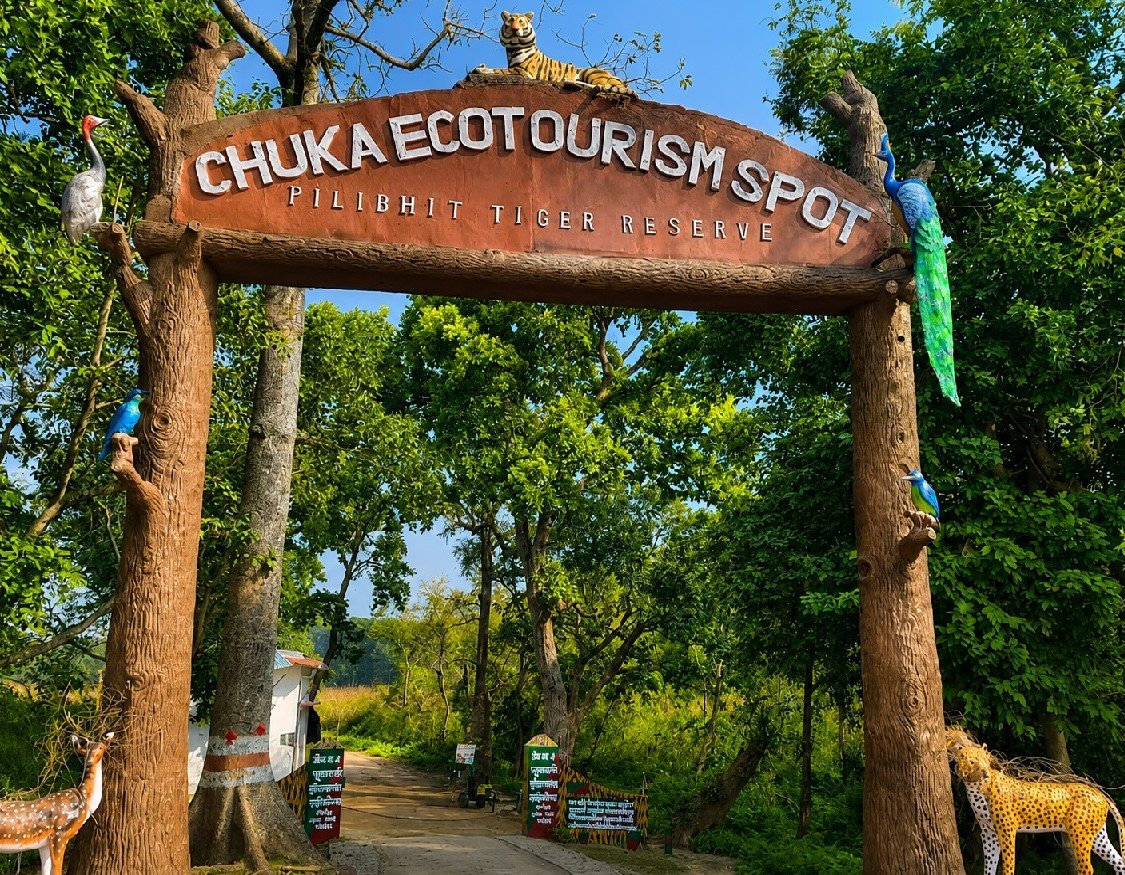
Pilibhit is a main district in Uttar Pradesh, situated in the northern part of the state near the India-Nepal border. It is a hidden gem known for its rich biodiversity, dense forests, religious sites, and cultural heritage. There are several places to visit in Pilibhit where you can spend some time in peace.
The district is most famous for the Pilibhit Tiger Reserve, one of India’s important tiger habitats, but it also offers beautiful temples, historical landmarks, rivers, and peaceful natural landscapes.
Whether you are a wildlife enthusiast, nature lover, pilgrim, or adventure seeker, Pilibhit has plenty to offer.
This travel guide explores the Best Places to Visit in Pilibhit and the top things to do during your trip.
Best Places to Visit in Pilibhit Uttar Pradesh
Pilibhit Tiger Reserve
Pilibhit Tiger Reserve is the crown jewel of the district and one of the most important wildlife destinations in Uttar Pradesh. Spread across dense forests, grasslands, and wetlands, the reserve is home to Bengal tigers, leopards, deer, wild boars, and hundreds of bird species.
This tiger reserve is located near the India-Nepal border and is easily accessible by road. Surrounded by natural beauty, it offers a truly memorable experience. Towering trees such as Sal, Teak, Eucalyptus, and Arjun, along with dense greenery, bring the forest to life and lend it a magnificent aura.
The water soruce here serves as the forest’s lifeline, sustaining its rich wildlife. Accommodation facilities are also available for tourists and visitors, allowing them to enjoy the beauty of the place.
The reserve forms part of the Terai Arc Landscape and offers an unforgettable wildlife experience through jeep safaris and nature tours.
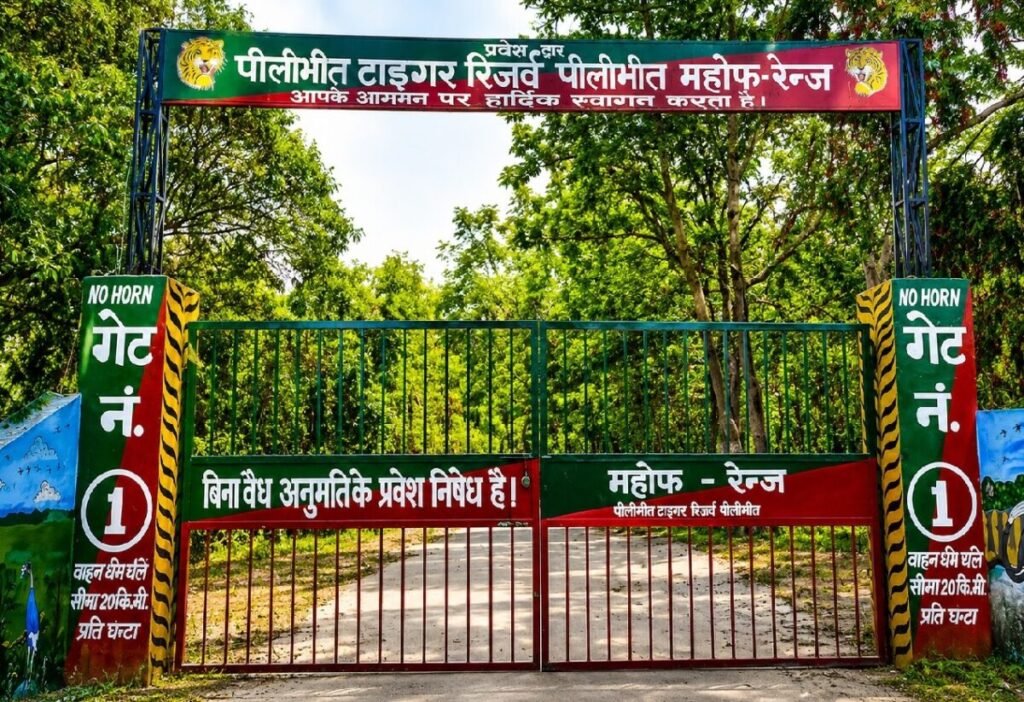
Chuka Beach
Often called the “Hidden Paradise of Uttar Pradesh,” Chuka Beach is located within the Pilibhit Tiger Reserve. The scenic destination features a beautiful water reservoir surrounded by dense forests. The Chuka Beach area, located near the Sharda Sagar Dam, which is considered one of Asia’s largest dams.
It is a popular destination where people come to enjoy nature, relax, and have fun with their families. With its calm waters and soft sand, the dam area resembles a beach. This beach area is stunning and offers various amenities. Accommodation options include Tharu huts, standard rooms, and treehouses, all equipped with hot water facilities.
There is also a souvenir shop where you can buy gifts for friends and family. The scenery is particularly spectacular around March and April. A canteen, managed by the local committee, serves delicious and hygienic food. Additionally, the location offers beautiful views of the natural surroundings.
You can spot monitor lizards, tiger, deers, and several birds here, which are fascinating creatures. Various birds and animals roam freely in the area, engaging in a range of natural activities. Visitors can enjoy breathtaking sunsets, boating, photography, and nature walks in this peaceful setting.
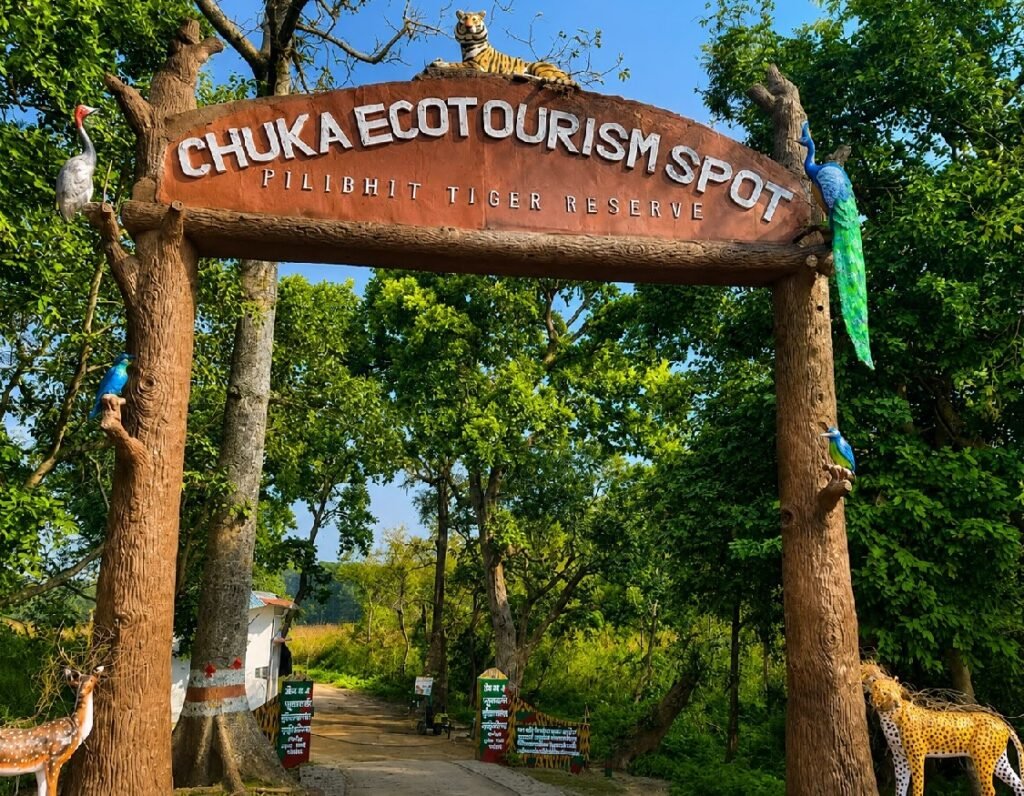
Gomti Udgam Sthal
The Gomti River originates in Pilibhit, making Gomti Udgam Sthal an important geographical and cultural landmark. The Gomti River is a major river in Uttar Pradesh, and its source lies in Madhotanda village. A large and sacred pond known as ‘Phulhar Lake’ is located here. This site is considered the starting point of the Gomti River. Surrounded by natural greenery, the location holds great significance from both ecological and cultural perspectives.
It is a tributary of the Ganges River. The presence of temples and the lake creates a beautiful atmosphere, attracting numerous devotees and tourists. The lake also holds mythological importance; it is said that many sages performed penance here.
The site attracts visitors interested in exploring the source of one of North India’s major rivers. The surrounding greenery and tranquil atmosphere make it a pleasant destination for nature lovers.
Khakhra Riverfront
The Khakhra is the main river of Pilibhit and flows through the heart of the city. It is easily accessible by road and very beautiful. It is a beautiful river, and a lovely riverfront has been developed along it, attracting nature lovers and tourists alike.
Gauri Shankar Temple
The Gauri Shankar Temple is a prominent Shiva temple known for its religious importance and traditional architecture. This temple is located near the Khakhra River in the main town. It is easily accessible, allowing visitors to seek the blessings of Lord Shiva and Goddess Parvati. A sense of peace is felt the moment one steps into the temple.
The temple features a traditional design, and the idol of Shiva and Parvati housed within is exquisitely beautiful and sacred. Large crowds gather here, especially on Shivratri and the Mondays of the holy month of Sawan, as numerous devotees visit to offer prayers to Bholenath.
It is one of the oldest temple of the Pilibhit town and lots of belief associated with it. The pilgrim lodge located in the outer area of the temple, where devotees stay.
Jama Masjid Pilibhit
The Jama Masjid in Pilibhit is a site of historical and religious significance. Situated in the heart of the city, it is easily accessible and ranks among the oldest and most beautiful structures in the main town. The mosque was built by Hafiz Rahmat Khan in 1769. It is a magnificent structure that attracts numerous visitors and tourists.
The mosque features impressive large domes that look truly spectacular. Inside, a large water tank further enhances its beauty. Prayers are held here every Friday, drawing many members of the Muslim community to offer their prayers.
Jaisantri Devi Temple
Jaisantri Devi Temple is one of the most respected religious sites in Pilibhit. Dedicated to Goddess Durga, the temple attracts thousands of devotees during Navratri and other festivals. It is located in the main city and is easily accessible.
The temple is beautifully constructed, and many devotees visit to seek the blessings of the Goddess. The temple’s peaceful surroundings and spiritual ambiance make it a popular pilgrimage destination.
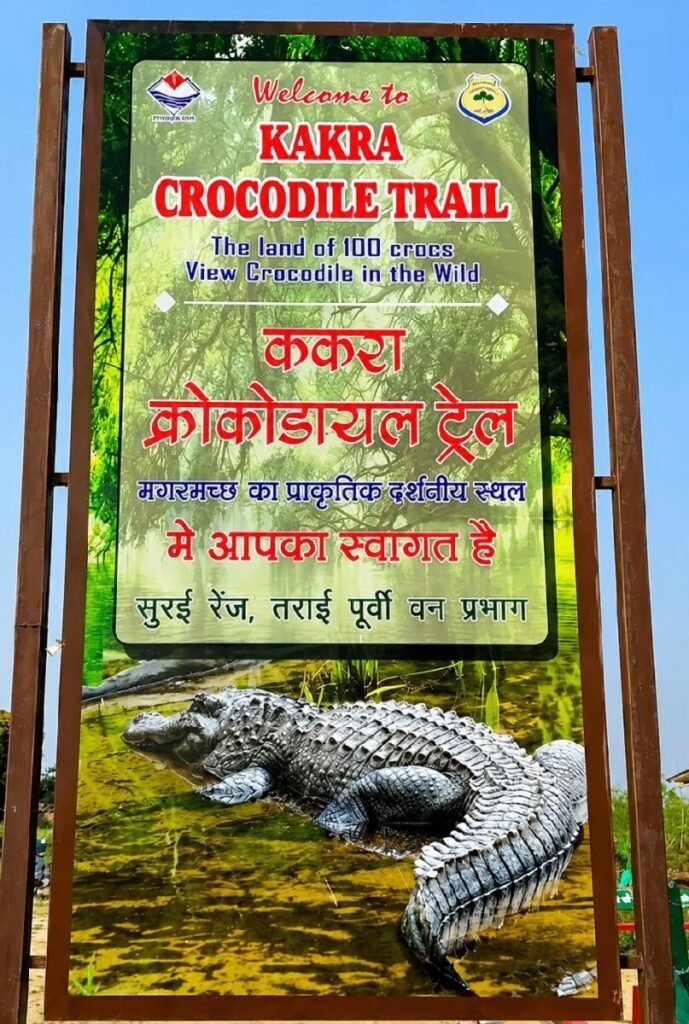
Kakra Crocodile Park
Kakra Crocodile Park is a scenic destination near Pilibhit district. Located in Kakra village, close to the border between Pilibhit and Uttarakhand and it is easily accessible by road. Established in 2002, the park serves as a dedicated site for crocodile conservation and research.
Spanning around 6.5 hectares within the Pilibhit Tiger Reserve, it plays a crucial role in the conservation of long-snouted crocodiles. Here, you can observe the crocodiles and learn fascinating facts about them that you might not have known before.
Winter is the best time to visit, as the crocodiles emerge from the water to bask in the sun during this season. In addition to crocodiles, you can spot various bird species and diverse wildlife. The place offers a very peaceful and tranquil atmosphere.
Things to Do in Pilibhit
Pilibhit offers a wide range of activities for travelers who enjoy wildlife, nature, photography, and spirituality. One of the most exciting experiences is taking a jeep safari in Pilibhit Tiger Reserve. Visitors can spot Bengal tigers, leopards, deer, and various bird species while exploring the reserve’s diverse ecosystems.
- A visit to Chuka Beach is another must-do activity in Pilibhit.
- Birdwatching is particularly popular in Pilibhit due to its wetlands, rivers, and forest habitats.
- Nature enthusiasts can explore forest trails, enjoy eco-tourism activities, and spend time observing the rich biodiversity of the Terai region.
- Religious travelers can visit important temples such as Jaisantri Devi Temple and Gauri Shankar Temple.
- food lover explore the local Markets and the village area where you can taste our delicious local cuisine
Best Time to Visit Pilibhit
The best time to visit Pilibhit is from October to March when the weather remains pleasant and suitable for sightseeing and wildlife safaris. Winter is especially ideal for birdwatching and exploring the Pilibhit Tiger Reserve.
How to Reach Pilibhit
- By Air : The nearest major airport is Bareilly Airport, while Lucknow’s Chaudhary Charan Singh International Airport provides broader connectivity.
- By Train : Pilibhit Junction Railway Station is well connected to major cities in Uttar Pradesh and neighboring states.
- By Road : Pilibhit enjoys good road connectivity with Bareilly, Lucknow, Shahjahanpur, and other nearby cities. Regular buses and taxis are available.
Conclusion
Pilibhit is one of Uttar Pradesh’s most underrated travel destinations, offering a perfect blend of wildlife, nature, spirituality, and cultural experiences. From the thrilling safaris of Pilibhit Tiger Reserve and the scenic beauty of Chuka Beach to sacred temples and peaceful river landscapes, the district has something for every traveler.
Whether you are looking for adventure, relaxation, photography, birdwatching, or spiritual exploration, Pilibhit promises an unforgettable travel experience. A visit to this beautiful district reveals a side of Uttar Pradesh that remains largely untouched and full of natural wonders.
Best Places to Visit in Pilibhit Uttar Pradesh – FAQs
1. What is Pilibhit famous for?
Pilibhit is famous for the Pilibhit Tiger Reserve, dense forests, rich biodiversity, traditional flute (bansuri) making, sugarcane farming, and its proximity to the India–Nepal border. It is also known for its scenic wetlands and wildlife.
2. Which state is Pilibhit in?
Pilibhit is located in the state of Uttar Pradesh, India.
3. Pilibhit is in which district?
Pilibhit is the headquarters of Pilibhit district in Uttar Pradesh.
4. What is the area of Pilibhit district?
Pilibhit district covers an area of approximately 3,686 square kilometers.
5. What is the population of Pilibhit district?
According to the 2011 Census, Pilibhit district has a population of approximately 2.03 million (20.3 lakh). The current population is estimated to be higher.
6. Which industry is Pilibhit famous for?
Pilibhit is known for:
- Flute (Bansuri) manufacturing
- Sugar mills and sugar industry
- Agriculture-based industries
- Rice and grain processing
7. What is the forest area in Pilibhit?
A significant portion of the district is covered by forests, mainly within the Pilibhit Tiger Reserve, which spans over 730 sq km of core protected area, along with surrounding forest divisions.
8. What is the distance of Pilibhit from major cities?
| City | Approx. Distance |
|---|---|
| Bareilly | 55 km |
| Lucknow | 260 km |
| Delhi | 290 km |
| Shahjahanpur | 90 km |
| Nainital | 120 km |
| Haldwani | 110 km |
| Agra | 330 km |
| Kanpur | 285 km |
9. Which Nepal border is near Pilibhit?
Pilibhit shares a border with Nepal’s Sudurpashchim Province, and the nearest international border crossing is through the Puranpur area.
10. What do you mean by Pilibhit?
The name “Pilibhit” is believed to have originated from the Hindi words ‘Peeli’ (yellow) and ‘Bheet’ (wall or mound), though there are different historical interpretations regarding its origin.
11. What is Dudhwa and Pilibhit?
Dudhwa National Park and Pilibhit Tiger Reserve are two important protected wildlife areas in the Terai region of Uttar Pradesh. Both are renowned for Bengal tigers, elephants, wetlands, birds, and rich biodiversity.
12. Which river flows through Pilibhit?
Major rivers in Pilibhit include:
- Sharda (Mahakali)
- Gomti (originates near Pilibhit)
- Devha
- Khakra
- Chuka River
13. What are the best places to visit in Pilibhit?
Popular attractions include:
- Pilibhit Tiger Reserve
- Chuka Beach
- Chuka Eco-Tourism Spot
- Gomti Udgam Sthal (Source of Gomti River)
- Jangleshwar Temple
- Gauri Shankar Temple
- Raja Venu Ka Tila
- Sharda Sagar Dam
14. Which places can I visit near Pilibhit?
Some popular nearby destinations are:
- Dudhwa National Park
- Bareilly
- Lakhimpur Kheri
- Shahjahanpur
- Nainital
- Haldwani
- Khatima
- Tanakpur
15. Places to visit near Pilibhit within 100 km
- Chuka Beach
- Dudhwa National Park
- Khatima
- Sharda Sagar Dam
- Bareilly
- Gomti Udgam Sthal
16. Places to visit near Pilibhit within 200 km
- Nainital
- Haldwani
- Bhimtal
- Naukuchiatal
- Tanakpur
- Kathgodam
- Corbett landscape (buffer areas)
- Sitarganj
17. Are there any hill stations near Pilibhit?
Yes. Nearby hill stations include:
- Nainital
- Bhimtal
- Naukuchiatal
- Mukteshwar
- Ranikhet
- Almora
18. Which hill stations are within 100 km of Pilibhit?
Within approximately 100 km, the nearest hilly destinations include:
- Khatima foothills
- Parts of the Kumaon foothill region
- Nainital is slightly beyond 100 km depending on the route.
19. Is Pilibhit famous for tigers?
Yes. Pilibhit is one of India’s prominent tiger habitats and is internationally recognized because of the Pilibhit Tiger Reserve, home to Bengal tigers, leopards, elephants, and over 300 bird species.
20. What is Pilibhit Tiger Reserve famous for?
Pilibhit Tiger Reserve is famous for:
- Bengal tigers
- Dense Sal forests
- Grasslands and wetlands
- Birdwatching
- Jungle safari
- Rich Terai ecosystem
- Wildlife photography
21. What is the famous food of Pilibhit?
Some popular local foods include:
- Kachori Sabzi
- Bedmi Puri
- Jalebi
- Rabri
- Lassi
- Sugarcane juice
- Traditional North Indian sweets
22. Which are the famous temples in Pilibhit?
Popular temples include:
- Jangleshwar Temple
- Gauri Shankar Temple
- Hanuman Mandir
- Shiv Mandir Chuka Area
- Durga Mandir
- Kali Temple
23. Is Pilibhit good for wildlife tourism?
Yes. Pilibhit is among the best wildlife destinations in Uttar Pradesh for jungle safaris, birdwatching, nature photography, and eco-tourism.
24. What is the best time to visit Pilibhit?
The ideal time to visit is October to March, when the weather is pleasant and wildlife sightings are more common. The tiger reserve generally remains closed during much of the monsoon season.
25. How can I reach Pilibhit?
- By Air: The nearest major airport is Bareilly Airport, while Lucknow Airport offers wider connectivity.
- By Train: Pilibhit Junction is well connected to major cities in North India.
- By Road: Pilibhit has good road links with Bareilly, Lucknow, Delhi, Shahjahanpur, and nearby towns in Uttarakhand.